Dairy & Milk Packaging
Nitrogen Generators for Dairy Packaging
On-site nitrogen for fluid milk, cream, dairy beverages, yogurt, sour cream, and milk powder. 99.5% to 99.9% purity feeding aseptic and ESL fillers, cup and bottle lines, liquid nitrogen dosers, and MAP blenders. Up to 90% lower gas cost than delivered nitrogen, with most dairy plants paying back in 12 to 14 months.
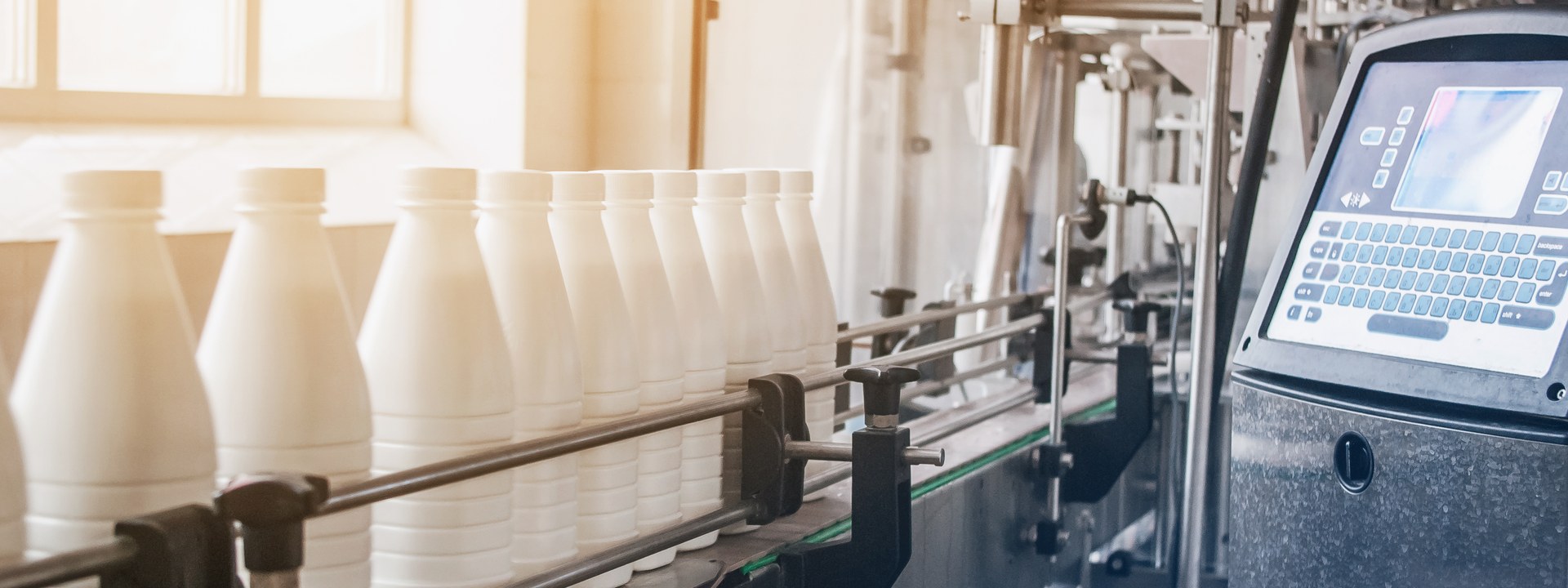
Fluid milk, cream, cultured dairy, and dairy powders across dairy plants, aseptic beverage plants, and co-packers nationwide.
What we do
Dairy packaging depends on a continuous supply of high-purity nitrogen to strip dissolved oxygen from liquid product, displace headspace air before sealing, and blanket storage tanks and dairy powders. This protects flavor, fat, and heat-sensitive vitamins in fluid milk, cream, coffee creamers, ready-to-drink dairy beverages, yogurt, sour cream, cottage cheese, and milk and whey powders. Gas Generation Solutions supplies on-site nitrogen generators for dairies, aseptic beverage plants, cultured dairy processors, powder plants, and co-manufacturers. Our systems produce nitrogen at purities from 95% up to 99.9995% and reduce gas costs by up to 90% compared to delivered nitrogen. Gas Generation Solutions was incorporated in 1979 and has over 40 years of industry experience. Our USA-built systems ship across the United States, Mexico, and Canada. For cheese, see our cheese packaging page; for the broader packaging science, see our MAP nitrogen page or the food grade cornerstone.
Applications
How nitrogen is used in dairy packaging
A correctly sized on-site generator supplies every nitrogen point of use in the plant from a single source.
Deaeration
Nitrogen sparging strips dissolved oxygen from milk, cream, and dairy beverages before filling. Protects vitamins and slows fat rancidity.
Headspace flush & LN2 dosing
Nitrogen displaces headspace air; liquid nitrogen dosing adds pack rigidity while removing oxygen. Standard for milk, creamers, and RTD dairy.
MAP blending
Cultured dairy (yogurt, sour cream, cottage cheese) under N₂/CO₂. CO₂ inhibits mold; N₂ maintains cup volume.
Tank & silo blanketing
Nitrogen blanket over milk, cream, and aseptic surge tanks keeps air off product during storage, holding, and transfer.
Powder inerting
Milk powder, whey, and infant formula nitrogen-packed in cans, bags, and totes. Prevents fat oxidation, off-flavors, and caking.
One generator, plant-wide supply. A single correctly sized system feeds every filling line, MAP blender, LN2 doser, storage tank, and powder-packing station. Adding lines later requires only a capacity expansion, not new delivered-gas infrastructure.
Purity & gas selection
Two purity tiers. Gas tuned to each product. One generator supplies them all.
Nitrogen purity
99.5% for standard dairy, up to 99.9% for sensitive powders
Required purity for dairy packaging falls in a tight range measured as percent N₂ with the balance as residual oxygen in parts per million.
5,000 ppm O₂
Fluid milk, cream, and cultured dairy under standard refrigerated distribution.
1,000 ppm O₂
Aseptic and extended-shelf-life dairy beverages, coffee creamers, export formats, and oxygen-sensitive powders such as whole milk powder and infant formula.
Gas by product
Gas tuned to the product
Dairy gas selection depends on the product. Liquid dairy runs on nitrogen for deaeration and headspace flush; cultured products add carbon dioxide for mold and yeast control.
N₂ only
Fluid milk, cream, creamers, RTD dairy. Deaeration and headspace flush; CO₂ is avoided because it dissolves and causes acid off-flavors.
Cultured
Cottage cheese, sour cream, some yogurts. CO₂ inhibits mold and yeast; N₂ supports cup volume. Ratio set by the processor.
CO₂ only
Some cultured products where maximum mold and yeast inhibition takes priority.
N₂ powders
Milk powder, whey, infant formula inerted and packed under pure nitrogen to hold residual can oxygen as low as possible.
Equipment compatibility
Built for every major dairy filling and packaging OEM
Our nitrogen generators supply dairy filling and packaging equipment from every major OEM. Each machine has its own inlet pressure, flow, and purity spec; we review the spec sheet, match the generator output, and confirm compatibility before quoting.
Systems in the field
Deployed dairy and food packaging nitrogen systems
Real customer installs supplying dairy filling lines, MAP blenders, LN2 dosers, and plant-wide nitrogen demand from a single on-site source.
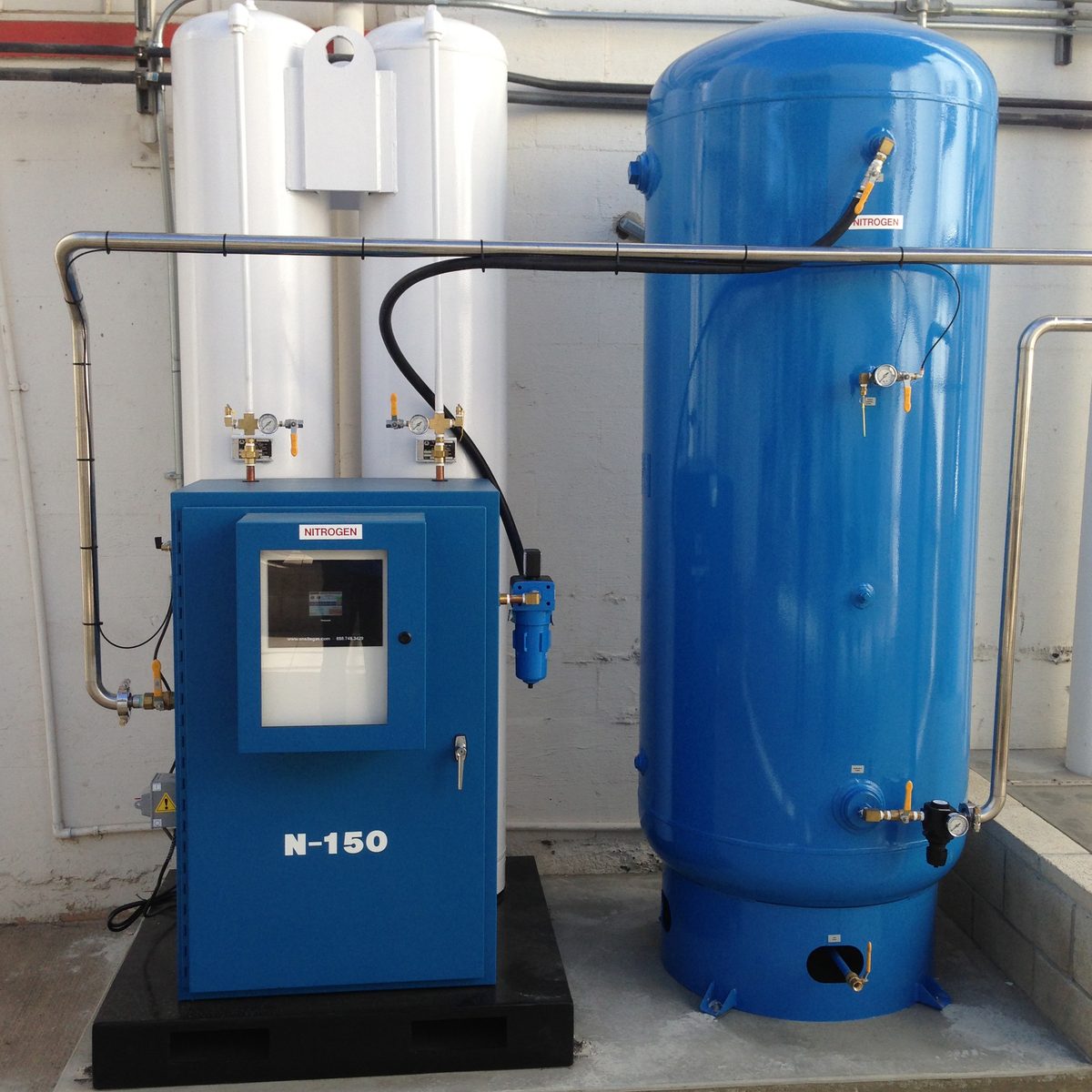
N-150 · Dairy & food packaging
N-150 with vertical receiver supplying a dairy packaging line
Compact PSA generator with sieve column and a vertical buffer tank, sized for a single-line dairy MAP operation.

Deployed system · Food & dairy packaging
On-site nitrogen generator supplying a packaging plant
PSA nitrogen generator with sieve columns and buffer storage, the same class of system that feeds dairy filling lines, MAP blenders, and bulk handling stations from a single source.
Sizing & ROI
Sized to measured demand, paid back in 12 to 14 months
Dairy plant tiers
Nitrogen consumption by plant size
Small cultured & specialty
Craft and cultured dairy, specialty producers, pilot-scale co-packers.
Mid-size regional
One to three filling lines, mixed fluid, cultured, and beverage formats.
Large commercial & aseptic
Multi-line dairy and aseptic beverage plants with retail and foodservice SKUs.
Deaeration and tank blanketing add roughly 200 to 1,000 SCFH, and powder inerting adds 100 to 500 SCFH per station, on top of filling-line demand. Our free flow meter rental with cellular data logger measures actual dairy plant consumption over days or weeks, so measured data drives sizing instead of nameplate estimates that often overstate demand.
Cost & payback
Up to 90% lower gas cost vs delivered nitrogen
12 to 14 mo
Typical payback
20+ yr
Service life
$15,000 to $150,000+ system price range for dairy plants.
Delivered nitrogen carries compounding costs: gas charges, cylinder or dewar rental, hazmat fees, delivery surcharges, and 2 to 8% per day boil-off from idle liquid tanks. On-site generation eliminates all of them. Recurring cost is electricity for compressed air plus routine filter changes.
Food safety & shelf life
Longer shelf life with consistent gas supply
Nitrogen used in dairy packaging is food-grade inert gas, listed as Generally Recognized As Safe under FDA 21 CFR 184.1540. It lowers dissolved oxygen in liquid product before filling and displaces atmospheric oxygen from the pack headspace.
- Oxidative rancidity of milk fat:slowed by lower dissolved and headspace oxygen
- Heat-sensitive vitamins (A, C, riboflavin):protected across the shelf life
- Mold, yeast, and aerobic bacteria:inhibited by CO₂ in cultured-product MAP
- Consistent purity and flow:every filling run hits target flush, deaeration, and purity
Maintenance
Three filter changes a year, no service contract required
Dairy plant nitrogen generators require minimal routine maintenance. Plant maintenance teams perform filter changes themselves. Annual filter cost is typically a few hundred dollars depending on system size.
- Every 3 months:water and dirt filter change
- Every 6 months:oil filter change, valve and safety device inspection
- Every 12 months:charcoal final filter change
- Sealed sieve beds:no top-off required under normal operation
Related pages
MAP science, food grade context, and sibling F&B pages
The dairy page is one part of a broader F&B cluster. Go up to MAP packaging science and the food grade cornerstone, or across to the other F&B segments.
MAP sub-hub
Nitrogen Generator for Food Packaging and MAP
F&B cornerstone
Food Grade Nitrogen Gas Generator
Cheese
60/40 · 70/30Shredded, sliced, block, and bulk cheese.
Snack Food
100% N₂Chips, pretzels, popcorn, extruded snacks.
Coffee
100% N₂Whole bean, ground, pods, RTD.
Wineries
SpargingTank blanketing, sparging, bottle inerting.
Salad & Produce
80/15/5Respiration-balanced MAP blends.
Pet Food
100% N₂Dry food, treats, birdseed.
Shelf Life Data
ReferenceHow long nitrogen flushing extends dairy products.
Frequently asked
Questions about dairy packaging nitrogen generators
What purity of nitrogen is required for dairy packaging?
Most dairy packaging runs at 99.5% to 99.9% nitrogen purity (1,000 to 5,000 ppm oxygen). Fluid milk, cream, and cultured dairy typically run at 99.5%. Aseptic beverages, creamers, export formats, and oxygen-sensitive powders such as whole milk powder and infant formula run at 99.9%. Our generators are capable of any purity from 95% up to 99.9995% for specialty applications.
Why is nitrogen used for milk and liquid dairy?
Liquid dairy holds dissolved oxygen that drives fat oxidation and destroys heat-sensitive vitamins over the shelf life. Nitrogen sparging strips that dissolved oxygen before filling, and a nitrogen headspace flush or liquid nitrogen dose keeps air out of the sealed container. CO2 is usually avoided in liquid dairy because it dissolves into the product and causes acid off-flavors, so pure nitrogen is the standard gas for milk, cream, and dairy beverages.
What gas blend is used for yogurt, sour cream, and cottage cheese?
Cultured dairy products are commonly packaged under a nitrogen and carbon dioxide blend. CO2 inhibits mold, yeast, and aerobic spoilage organisms, and nitrogen maintains cup volume and prevents lid doming or collapse. Ratios are product-specific and set by the processor. Some cultured products use 100% CO2 when maximum mold inhibition is the priority. On-site nitrogen generators feed the nitrogen side of the blend and eliminate the largest recurring gas cost.
Can one nitrogen generator feed multiple dairy lines?
Yes. A single generator sized to total plant demand supplies multiple filling lines, MAP blenders, liquid nitrogen dosers, tank blanketing, and powder-packing stations from one source. This is more cost-effective than separate supplies at each line and simplifies expansion when new lines are added.
How much does a nitrogen generator for a dairy plant cost?
Systems for dairy plants typically range from approximately $15,000 for a small cultured or specialty operation to over $150,000 for multi-line commercial and aseptic beverage producers. Price depends on total flow rate, required purity, delivery pressure, and any redundancy requirements. Regardless of system size, the average payback remains 12 to 14 months.
How much nitrogen does a dairy packaging line use?
Consumption varies by line speed, product, and whether liquid deaeration is used. Small cultured plants typically use 100 to 500 SCFH total. Mid-size regional dairy and beverage plants use 500 to 3,000 SCFH. Large multi-line and aseptic plants use 3,000 to 12,000 SCFH or more. Our free flow meter rental with cellular data logger measures your actual consumption so the generator is sized to real demand.
Does on-site nitrogen extend shelf life compared to delivered gas?
On-site nitrogen generation delivers the same food-grade inert gas as cylinders, dewars, and bulk liquid. The difference is consistency. On-site systems produce nitrogen at the same specification around the clock, with no cylinder changeovers, no low-dewar events, and no delivery delays. Every filling run hits the target flush rate, deaeration level, and purity, which protects shelf life. Delivered-gas facilities sometimes reduce flush rate or run at lower purity to manage supply, which shortens shelf life.
How long does a nitrogen generator last?
Our systems are designed for 20 years or more of continuous service. Sealed sieve beds do not require replacement or top-off under normal operating conditions. Competing systems using flanged sieve beds may require sieve replacement every 8 to 10 years, which is a significant hidden cost over the life of the equipment.
Size Your Dairy Plant System
Borrow a flow meter. Size the generator to your actual plant demand.
We rent a flow meter at no charge, sized for dairy and beverage service. The meter installs inline between your current nitrogen supply and your packaging lines, with a cellular data logger so you can view flow rate and pressure in real time on our dedicated server. No WiFi required at your facility. After a few weeks of normal production we size the generator and storage to your measured peak simultaneous demand, not a nameplate estimate. Most dairy plants recover their full system investment inside 14 months.
Already know your flow, purity, and pressure? Send them over with your packaging equipment list and we will return a complete quotation the same day.