Soldering Excellence
Nitrogen Generators for Selective, Reflow, and Wave Soldering
High-purity nitrogen helps produce oxide-free solder joints and minimizes defects across selective, reflow, and wave soldering processes.
Purity range
Typical payback
Service life
On-site systems
Nitrogen is essential in soldering because it helps minimize oxidation of molten solder, flux, and component leads during the entire reflow or wave process. Without an inert atmosphere, oxygen reacts with the solder surface, forming oxides that degrade wetting, reduce joint strength, and cause visible defects.
Gas Generation Solutions supplies on-site nitrogen generators sized for selective, reflow, and wave soldering lines. Our PSA systems deliver the high purity and consistent flow that electronics manufacturers require. Most customers reduce nitrogen costs by up to 90% compared to cylinder and bulk supply while improving solder quality and eliminating logistics overhead. A single soldering line can often run on a small nitrogen system.
Below, we explain how nitrogen works in soldering, compare the three main processes, and walk you through purity tiers and installation fundamentals.
Three soldering processes, one nitrogen solution
| Attribute | Selective Soldering | Reflow Soldering | Wave Soldering |
|---|---|---|---|
| Typical purity required | 99.99% to 99.999% | 99.9% to 99.99% | 99.9% to 99.99% |
| Typical flow rate | 50 to 500 SCFH | 300 to 3,000 SCFH | 200 to 2,000 SCFH |
| Oven volume | Small chambers or inline | Belt oven 15 to 60 feet long | Wave bath container |
| Primary benefit of nitrogen | Helps prevent bridging and cold solder joints on selective joints | Helps prevent tombstoning, reduces dross formation, improves wetting | Reduces oxidation buildup on wave bath surface |
| Link to details | View details | View details | View details |
Nitrogen purity tiers for soldering
Different processes benefit from different purity levels. Higher purity reduces oxide formation and improves solder joint appearance and strength.
Entry tier
Common for wave soldering and lower-speed reflow lines. Reduces oxidation buildup on the wave bath surface and limits bridging defects in standard reflow. Lower-cost entry point.
Mid-range
Top end for wave and reflow soldering, and the entry point for selective soldering. Standard for most commercial PCB assembly. Cuts oxide defects and joint imperfections significantly.
High purity
Top end for selective soldering and precision fine-pitch assembly. Used where joint quality is mission-critical: automotive, aerospace, and medical electronics manufacturing.
Ultra-high
Maximum purity available on PSA systems. Used where defect rates must be near zero: military, space hardware, and advanced semiconductor packaging.
Installation proof
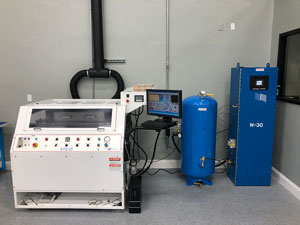
Selective soldering workstation with on-site nitrogen generator ensuring zero oxide defects on hand-soldered connections.
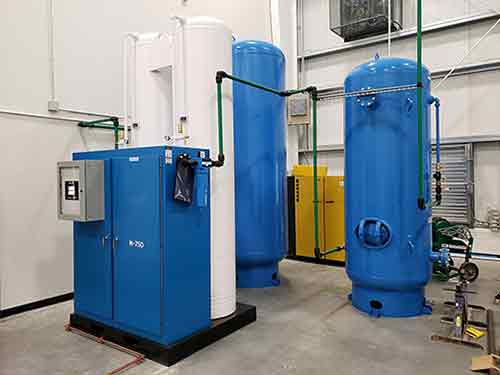
Production floor installation supplying consistent nitrogen to multiple soldering stations simultaneously.
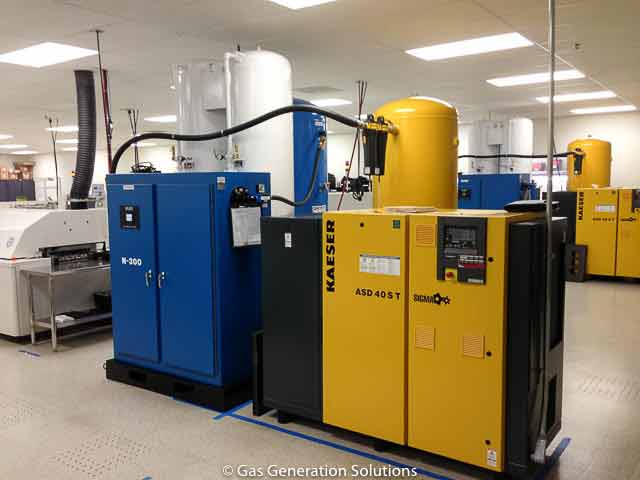
Reflow solder oven with integrated nitrogen atmosphere control, eliminating bridging and tombstoning defects.
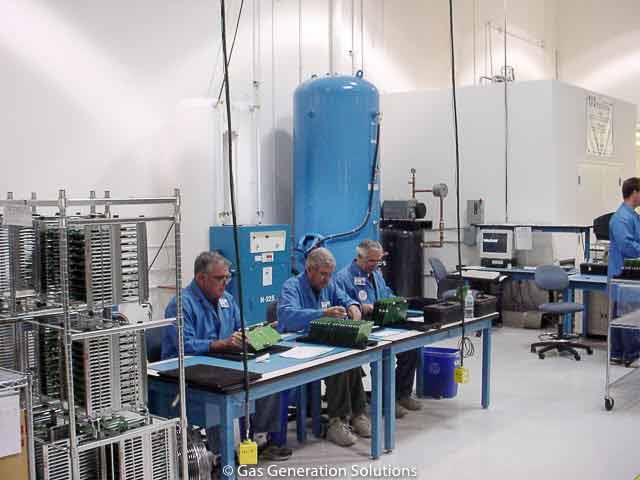
On-site generation delivers the high-purity, reliable nitrogen stream that electronics manufacturers depend on.
Soldering applications across electronics
PCB assembly
Automated and manual PCB assembly lines depend on nitrogen to help minimize oxidation of solder paste, flux, and component leads throughout the production run.
Automotive electronics
Automotive ECUs, sensors, and control boards require high-reliability solder joints. Nitrogen helps prevent defects that could cause field failures.
Telecom equipment
Telecom boards, switches, and optical modules demand precision soldering. On-site nitrogen supports consistent joint quality across production.
Military and aerospace boards
Avionics, military-grade electronics, and aerospace systems require defect-free solder joints and may mandate ultrahigh purity nitrogen per specification.
Medical devices
Medical implants, diagnostic instruments, and patient-facing devices must meet strict reliability standards. Nitrogen-assisted soldering supports repeatability.
Consumer electronics
Consumer products, IoT devices, and smart home electronics benefit from reduced defect rates and improved first-pass yield.
Frequently asked questions
Why is nitrogen needed in soldering?
Nitrogen creates an inert atmosphere that helps minimize oxygen reactions with molten solder, flux, and component leads. Without nitrogen, oxygen oxidation causes poor wetting, bridging defects, cold solder joints, reduced joint strength, and visible surface degradation. On-site nitrogen generation helps reduce these defects across selective, reflow, and wave soldering processes.
What purity does my soldering process require?
Selective soldering typically needs 99.99% to 99.999% nitrogen. Reflow and wave soldering both run at 99.9% to 99.99%. Military, aerospace, and medical applications may mandate 99.9995% (ultra-high purity). The higher the purity, the fewer oxide defects form. We recommend contacting us with your oven and process specifications so we can recommend the right purity tier for your application.
How much nitrogen flow do I need?
Flow requirements depend on oven volume, process speed, and atmospheric control target. Selective soldering typically uses 50 to 500 SCFH. Wave soldering uses 200 to 2,000 SCFH. Reflow ovens use 300 to 3,000 SCFH depending on oven length and belt speed. We maintain published flow-rate tables covering major OEM machines for each process at our selective soldering equipment nitrogen flow rates, reflow soldering equipment nitrogen flow rates, and wave soldering equipment nitrogen flow rates pages. Contact us with your oven specifications, line speed, and target oxygen percentage, and we will size a generator to match your demand.
Can I retrofit nitrogen to an existing oven?
Yes. Most solder ovens can be retrofitted with nitrogen supply lines and an inert-gas control valve or simple gas mixer. The oven itself does not need modification. We have retrofit experience with selective soldering stations, reflow belt ovens, and wave soldering systems. Contact us with the oven model and current atmosphere setup, and we will advise on integration approach and generator sizing.
How does on-site nitrogen generation compare to cylinders and bulk supply?
Cylinders cost 6 to 10 dollars per hundred cubic feet, dewars cost 4 to 6 dollars per CCF, and bulk LIN costs 0.50 to 1.50 dollars per CCF. On-site generation costs just 0.05 to 0.15 dollars per CCF, delivering up to 90 percent savings. Most customers recover their investment within 12 to 14 months. Ongoing savings continue for the 20+ year life of the system.
What is dew point and why does it matter in soldering?
Dew point is the temperature at which moisture condenses. High dew point nitrogen introduces water into the solder joint, causing oxidation and joint degradation. Soldering typically requires dry nitrogen at minus 40 dew point or better. PSA generators produce dry nitrogen if the upstream compressed air supply is properly dried and filtered. Inadequate air drying is a common installation issue; we design air treatment into every system.
Does lead-free soldering (RoHS) require different nitrogen purity?
Lead-free (RoHS) solder has a higher melting point (typically 250 degrees Celsius versus 183 degrees for tin-lead) and is slightly more sensitive to oxidation. Most lead-free applications benefit from the same purity levels as traditional solder, and some high-speed processes may require one tier higher. Discuss your lead-free transition with us; we can advise purity and flow based on your specific assembly process and defect history.
Who handles installation and maintenance?
Gas Generation Solutions designs and supplies the on-site nitrogen system. Installation is performed by the customer's qualified mechanical and electrical contractors, since site conditions, gas piping, and integration with existing soldering equipment vary by facility. We support the project with sizing, system drawings, startup procedures, and operator training. Routine maintenance, mainly filter changes, is performed by the customer; we supply replacement parts and technical guidance throughout the system's 20-year service life. If you want installation included in the quote, we can scope it as a separate line item. Contact us for sizing and a quote.