
Salad Condiment Kits, Packets & Pouches
Nitrogen Generators for Salad Condiment Kits, Packets, and Pouches
On-site nitrogen for the dressings, dry toppings, cheese sachets, bacon bits, croutons, nuts, dried fruit, and spice blends that build out a finished salad kit. 99% to 99.9% purity feeding sachet, stick-pack, single-serve pouch, and master-pack horizontal lines. Up to 90% lower gas cost than delivered nitrogen, with most condiment-kit operations paying back in 12 to 14 months.
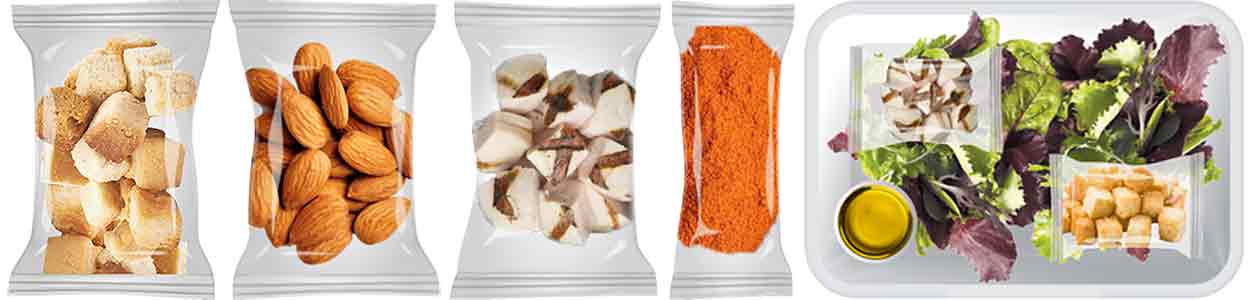
Dressings, croutons, cheese sachets, bacon bits, nuts, spice blends, dried fruit across sachet, stick-pack, single-serve pouch, and master-pack lines.
What we do
A finished salad kit is built from the greens plus a bag of dressing, a sachet of cheese, a packet of croutons, a strip of bacon bits, and sometimes a separate spice or seed pouch. Every one of those components is nitrogen flushed at fill to control oxidation, hold flavor, and protect against rancidity and microbial growth across a long retail cold chain. Gas Generation Solutions designs on-site nitrogen generators for salad kit assemblers, dressing and sauce co-packers, dry topping and spice blenders, single-serve sachet operations, and master-pack horizontal fill lines. Our systems produce nitrogen at purities from 95% up to 99.9995%, reducing gas costs by up to 90% compared to delivered nitrogen. Gas Generation Solutions has been in business since 1979. Our USA-built systems ship across the United States, Mexico, and Canada. For the fresh-cut greens that anchor a salad kit, see our salad and lettuce mix packaging page. For the broader packaging science, see our MAP nitrogen page or the food grade cornerstone.
Customer-packaged output
Salad kits, condiment packets, and pouches flushed with on-site nitrogen
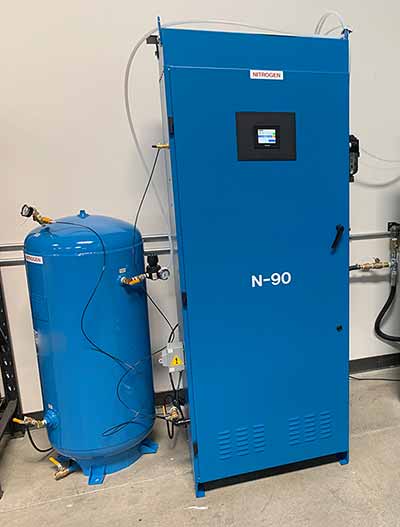
Master pack assembly
Multi-component salad kit master pack
Dressing pouch, cheese sachet, crouton packet, and protein bits packaged together on a horizontal master-pack line.
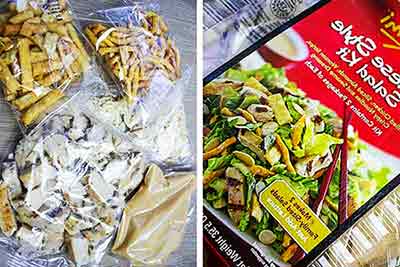
Sachet and pouch fill
Single-serve condiment packets and pouches
Dressings, dry toppings, spice blends, and shelf-stable condiments filled in stick packs, sachets, and three-side-seal pouches.
Applications
How nitrogen is used in salad condiment kit packaging
A correctly sized on-site generator supplies every nitrogen point of use across a kit operation from a single source: dry topping VFFS lines, master-pack horizontals, sachet and stick-pack lines, dressing pouch fillers, and single-serve condiment cup sealers.
Dry topping VFFS pouches
Vertical baggers fill croutons, nuts, seeds, dried fruit, and bacon bits into pillow pouches with a nitrogen flush at the form-tube to displace oxygen before sealing.
Master pack horizontal fill
Horizontal form-fill-seal and band-sealer lines combine multiple components (dressing, cheese, croutons, bacon) into a single master pack with a nitrogen flush before the outer overwrap is sealed.
Sachet and stick-pack lines
High-speed three-side-seal sachet and stick-pack machines fill spice blends, salt and pepper portions, and dry seasoning packets with nitrogen displacement at the fill nozzle.
Dressing and sauce pouches
Wet-fill dressing pouches, vinaigrette stick packs, and sauce sachets use a nitrogen sparge of the headspace before the fluid is dosed and the seal is closed, slowing oil oxidation and rancidity.
Spice and seasoning blends
Bulk and pouched spice and seasoning blends are nitrogen flushed at fill to lock in volatile flavor compounds, slow oxidation of essential oils, and protect color in red-spice and herb-forward blends.
Single-serve condiment cups
Foodservice and grab-and-go single-serve dressing and sauce cups use nitrogen flushing inside the seal chamber before the lidstock is applied for ambient shelf-stable distribution.
One generator, every component. A properly sized on-site system supplies the dry topping VFFS line, the dressing pouch line, the sachet line, the spice fill room, and the master-pack horizontal at the same time, from one source. One generator replaces the entire delivered-nitrogen supply chain across a multi-format kit operation.
Condiment categories
Salad kit components that use nitrogen flush
Every condiment-kit SKU has its own oxidation, moisture, and flavor-stability profile. Nitrogen flushing protects each one through retail distribution and through the consumer hold-time after the master pack is opened.
Dressings & vinaigrettes
Pouched and stick-pack ranch, Caesar, balsamic, Italian, vinaigrette, and oil-forward dressings.
Croutons & toasted bread
Seasoned croutons, focaccia chunks, toasted bagel, garlic bread bits, sourdough toast.
Cheese sachets
Shredded parmesan, feta crumbles, blue cheese, asiago, cotija, queso fresco portions.
Bacon & protein bits
Bacon bits, real bacon crumbles, prosciutto chips, salami, pepperoni, jerky bits.
Nuts, seeds & granola
Slivered almonds, candied pecans, sunflower seeds, pumpkin seeds, granola, wonton strips.
Dried fruit toppings
Dried cranberries, raisins, golden raisins, blueberries, cherries, mango chunks.
Spice & seasoning blends
Italian, ranch, taco, fajita, herb, peppercorn, and custom seasoning sachets and stick packs.
Single-serve condiment cups
Foodservice 0.5 to 2 oz dressing cups, sauce cups, dip cups for grab-and-go and meal kit programs.
Sized to the full kit lineup. We size the generator to the entire condiment-kit SKU range rather than a single line. New components and new master-pack configurations slot into existing capacity rather than triggering a new gas contract.
Purity & residual oxygen
Three purity tiers tuned to oil, moisture, and flavor stability.
Nitrogen purity
99% baseline, 99.5% for high-oil and color-sensitive items, 99.9% for premium and long-shelf programs
Salad condiment kits run across a wider purity range than the fresh greens because the failure modes are different. Dry crouton and seed packets, oil-rich nut blends, dressing pouches, and spice sachets each tolerate residual oxygen differently.
10,000 ppm O₂
Standard for dry topping pouches with short to moderate shelf life: croutons in salad kits, dried fruit, low-oil seasoning blends.
5,000 ppm O₂
Nuts, seeds, bacon bits, real cheese sachets, and color-sensitive blends with red spices, paprika, or fresh herbs.
1,000 ppm O₂
Premium long-shelf-life dressings, oil-heavy vinaigrettes, and shelf-stable single-serve condiment cups distributed at ambient temperature.
Why oxygen matters
Oxidation, rancidity, and flavor volatility, controlled at the seal
A condiment kit’s shelf life is set by the most oxygen-sensitive component in the master pack. Oils in dressings and nuts go rancid. Red spices fade. Dried fruit darkens. Volatile flavor compounds in herb blends and vinaigrettes evaporate or degrade. Nitrogen flushing displaces oxygen at fill so the headspace stays inert across the full distribution window.
Target O₂ in pack
Headspace oxygen below 1% is the standard target for nut, seed, dressing, and oil-rich blends. Below 0.5% for premium long-shelf programs.
Shelf life multiplier
Shelf life of high-oil croutons, nut blends, and bacon bits commonly extends three to six times the air-packed equivalent under nitrogen flush.
Typical shelf life
Nitrogen-flushed shelf-stable condiment packets routinely hold 12 to 24 months at ambient temperature, with refrigerated dressing pouches commonly clearing 90 to 180 days.
Equipment compatibility
Built for sachet, stick-pack, and master-pack OEMs
Our nitrogen generators supply condiment-kit packaging equipment from every major OEM, including dry topping VFFS, sachet and stick-pack lines, dressing pouch fillers, master-pack horizontals, and single-serve condiment cup sealers. Each machine has its own inlet pressure, flow, and purity spec; we review the spec sheet, match the generator output, and confirm compatibility before quoting.
Sizing & ROI
Sized to measured demand, paid back in 12 to 14 months
Condiment-kit operation tiers
Nitrogen consumption by operation size
Single-line specialty co-packer
One sachet, stick-pack, or VFFS topping line. Specialty dressing brands, niche seasoning blenders, regional foodservice condiments.
Multi-format kit assembler
Two to four lines spanning sachet, stick-pack, dressing pouch, and master-pack horizontal formats running concurrently.
Large kit co-packer
Multiple sachet rooms plus dedicated master-pack horizontals serving large fresh-cut salad customers, meal-kit programs, or QSR foodservice.
National condiment co-manufacturer
Scale operations running dressing, sauce, dry topping, spice, and master-pack lines simultaneously across multiple SKU programs.
Our free flow meter rental with cellular data logger measures actual plant consumption over days or weeks of normal production. The data logger transmits readings without plant WiFi or network access. Measured data drives sizing instead of nameplate estimates that often overstate demand.
Cost & payback
Up to 90% lower gas cost vs delivered nitrogen
12–14 mo
Typical payback
20+ yr
Service life
$20,000 to $200,000+ system price range for salad-condiment kit operations.
Delivered nitrogen for a kit operation carries compounding costs: gas charges, cylinder or dewar rental, hazmat fees, delivery surcharges, and 2 to 8% per day boil-off from idle liquid tanks. Sachet and stick-pack rooms are particularly bad on cylinder economics because the per-unit usage is small but the line uptime is constant. On-site generation eliminates all of these costs. Recurring cost is electricity for compressed air plus routine filter changes. Over a 20-year service life, cumulative savings on a multi-format kit operation routinely exceed several hundred thousand dollars.
Food safety & freshness
12 to 24 months of shelf-stable life from a consistent gas supply
Nitrogen used in condiment-kit packaging is food-grade inert gas, listed as Generally Recognized As Safe under FDA 21 CFR 184.1540. It controls oxidation, rancidity, color loss, and flavor volatility across every component in a salad kit master pack.
- Oil rancidity:slowed in dressings, croutons, nuts, seeds, and bacon bits
- Color stability:protected in red spices, paprika, dried fruit, and herb blends
- Flavor lock:volatile aroma compounds in vinaigrettes and seasoning held through distribution
- Shelf life:12 to 24 months ambient for shelf-stable packets, 90 to 180 days refrigerated for dressing pouches
Maintenance
Three filter changes a year, no service contract required
Condiment-kit nitrogen generators require minimal routine maintenance. Plant maintenance teams perform filter changes themselves. Annual filter cost is typically a few hundred dollars depending on system size.
- Every 3 months:water and dirt filter change
- Every 6 months:oil filter change, valve and safety device inspection
- Every 12 months:charcoal final filter change
- Sealed sieve beds:no top-off required under normal operation
Related pages
Sister page, MAP science, and other F&B segments
The salad condiment page pairs with the Salad and Lettuce Mix Packaging page for the full kit story. Go up to MAP packaging science and the food grade cornerstone, or across to other F&B segments.
MAP sub-hub
Nitrogen Generator for Food Packaging and MAP
F&B cornerstone
Food Grade Nitrogen Gas Generator
Salad & Lettuce Mixes
Sister pageSpring mix, baby greens, romaine, slaw, kit salads.
Cheese
60/40 · 70/30Shredded, sliced, block, grated, bulk.
Snack Food
100% N₂Chips, jerky, nuts, popcorn, trail mix.
Coffee
100% N₂Whole bean, ground, pods, RTD, cold brew.
Wineries
SpargingTank blanketing, sparging, bottle inerting.
Pet Food
100% N₂Dry food, treats, birdseed.
Shelf Life Data
ReferenceMeasured shelf life gains by food category.
Frequently asked
Questions about salad condiment kit nitrogen generators
What purity of nitrogen is required for salad condiment kits, packets, and pouches?
Salad condiment kit packaging runs at 99% to 99.9% nitrogen purity (1,000 to 10,000 ppm oxygen). Standard dry topping VFFS pouches and short-shelf-life packets run at 99%. Nuts, seeds, bacon bits, real cheese sachets, and color-sensitive blends with red spices or fresh herbs run at 99.5%. Premium long-shelf-life dressings, oil-heavy vinaigrettes, and shelf-stable single-serve condiment cups distributed at ambient temperature run at 99.9%.
How is nitrogen flushing used on salad-kit master packs that combine multiple components?
A salad-kit master pack typically contains a dressing pouch, a cheese sachet, a packet of croutons, a strip of bacon bits, and sometimes a separate spice or seed pouch. Each component is nitrogen flushed at fill on its own line. The components are then combined on a horizontal form-fill-seal or band-sealer master-pack line, which applies a second nitrogen flush to the outer overwrap before the seal is closed. A single on-site generator supplies every line in this workflow simultaneously.
Is the same nitrogen system suitable for dressing pouches, dry toppings, and spice blends?
Yes. A single generator sized to total operation demand supplies every condiment-kit format from one source: dry topping VFFS, sachet and stick-pack lines, dressing pouch fillers, master-pack horizontals, and single-serve condiment cup sealers. The generator delivers nitrogen at the highest purity any line on the floor requires; lines that run at lower purity simply use the same gas at the same spec. This is more cost-effective than separate supplies at each line.
How long do nitrogen-flushed salad condiment packets last?
Nitrogen-flushed shelf-stable condiment packets routinely hold 12 to 24 months at ambient temperature, with refrigerated dressing pouches commonly clearing 90 to 180 days. Shelf life of high-oil croutons, nut blends, and bacon bits commonly extends three to six times the air-packed equivalent under nitrogen flush. The shelf life is set by the most oxygen-sensitive component in the master pack.
How much does a nitrogen generator for a salad-kit operation cost?
Systems for salad-condiment kit operations typically range from approximately $20,000 for a single-line specialty co-packer to over $200,000 for national condiment co-manufacturers running dressing, sauce, dry topping, spice, and master-pack lines simultaneously. Price depends on total flow rate, required purity, delivery pressure, and any redundancy requirements. Average payback remains 12 to 14 months because sachet and stick-pack rooms are particularly bad on cylinder economics: per-unit usage is small but line uptime is constant.
How much nitrogen does a salad-condiment kit operation use?
Consumption varies by format mix and line speed. Single-line specialty co-packers typically use 100 to 500 SCFH. Multi-format kit assemblers running sachet, stick-pack, dressing pouch, and master-pack lines use 500 to 2,000 SCFH. Large kit co-packers serving fresh-cut salad or QSR foodservice customers use 2,000 to 6,000 SCFH. National condiment co-manufacturers use 6,000 to 15,000 SCFH or more. Our free flow meter rental with cellular data logger measures actual consumption so the generator is sized to real demand.
Can on-site nitrogen support oily dressings and dry toppings on the same gas supply?
Yes. The generator delivers nitrogen at the highest purity any line on the floor requires, typically 99.5% or 99.9% for an operation that includes oil-heavy dressings or vinaigrettes. Lines running dry toppings at the same time receive the same gas at the same spec; the higher purity is harmless on the dry topping line and gives a small additional shelf-life cushion. There is no need for separate nitrogen supplies for wet and dry components.
How long does a nitrogen generator last in a salad-kit packaging facility?
Our systems are designed for 20 years or more of continuous service. Sealed sieve beds do not require replacement or top-off under normal operating conditions. Competing systems using flanged sieve beds may require sieve replacement every 8 to 10 years, which is a significant hidden cost over the life of the equipment. Call 760-505-1300 or contact us here for a same-day quotation.
Size Your Condiment Kit System
Borrow a flow meter. Size the generator to your actual kit-line demand.
We rent a flow meter at no charge, sized for sachet, stick-pack, dressing pouch, and master-pack service. The meter installs inline between your current nitrogen supply and your packaging lines, with a cellular data logger so you can view flow rate and pressure in real time on our dedicated server. No WiFi required at your facility. After a few weeks of normal production we size the generator and storage to your measured peak simultaneous demand, not a nameplate estimate. Most condiment-kit operations recover their full system investment inside 14 months.
Already know your flow, purity, and pressure? Send them over with your packaging equipment list and we will return a complete quotation the same day.