
Popcorn Packaging & MAP
Nitrogen Generators for Popcorn Packaging
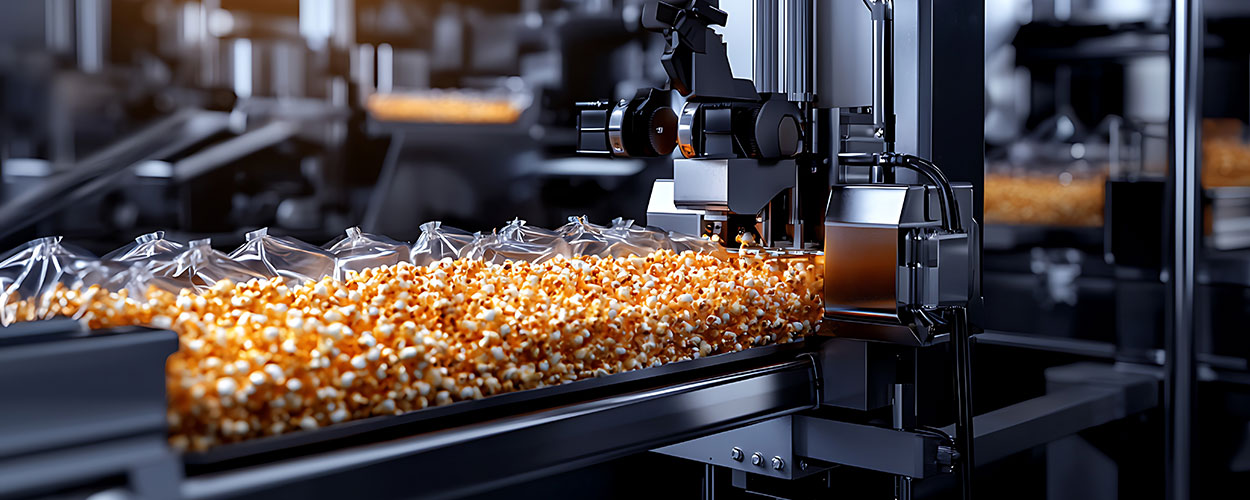
On-site nitrogen for popcorn modified atmosphere packaging across pre-popped bags, microwave packs, theater cartons, kettle corn, and caramel mixes. Slows oil rancidity, extends shelf life, and replaces delivered gas.
Food-grade purity
Gas-cost reduction
Typical payback
Service life
Why On-Site
Nitrogen Generators for Popcorn Packaging
Popcorn brands, co-packers, and contract packagers across microwave, pre-popped retail, theater-style, kettle, and caramel formats use nitrogen modified atmosphere packaging to slow oil rancidity, hold crunch, and extend shelf life. Popcorn is high-oil and high-surface-area, which makes residual oxygen the dominant spoilage driver in a sealed bag.
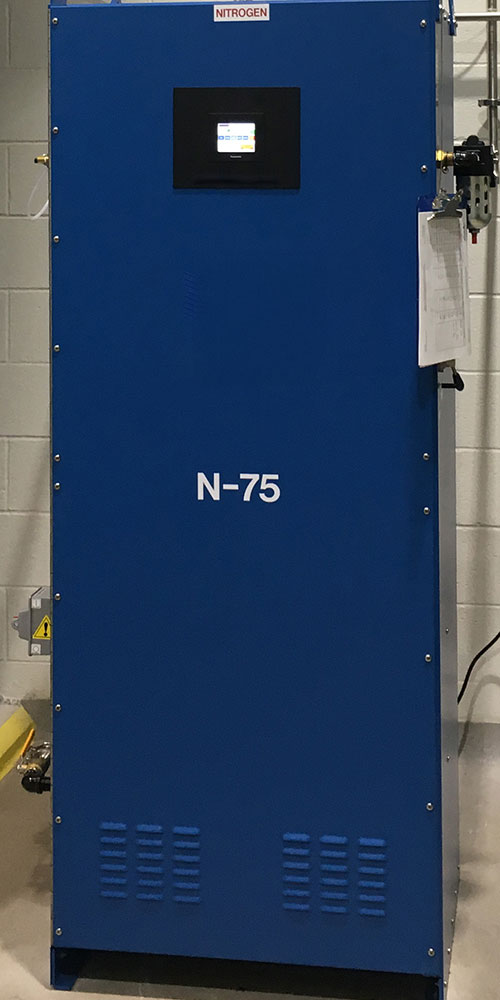
Gas Generation Solutions designs on-site nitrogen systems for popcorn packaging lines across the United States, Mexico, and Canada. Our PSA and membrane generators produce food-grade nitrogen at 99% to 99.5% purity, reducing gas cost by up to 90% compared to delivered cylinders, dewars, or bulk supply. In business since 1979, we supply USA-built systems sized to bag-flush flow rates and packaging machine throughput.
How Nitrogen Is Used
Eight popcorn packaging applications
Popcorn is high-oil and porous, which makes residual oxygen the dominant spoilage driver in any sealed package. Nitrogen displaces oxygen at the moment of seal and protects flavor across the supply chain.
Pre-popped retail bag flush
Vertical form-fill-seal (VFFS) bagging of pre-popped popcorn floods the headspace with nitrogen at the seal jaw to drop residual oxygen below 1%.
Microwave popcorn pouches
Microwave bags packed with unpopped kernels, oil, and seasoning are flushed with nitrogen before the outer overwrap to slow oil rancidity during shelf storage.
Theater-style cartons and tubs
Resealable cans, paperboard tubs, and gift cartons of pre-popped or kettle popcorn are gas-flushed or vacuum-purged before the final seal to extend shelf life on retail shelves.
Kettle corn (sugar-coated)
Kettle corn carries higher moisture and sugar content, which makes mold a concern alongside rancidity. Nitrogen displaces oxygen, sometimes blended with CO2 to further suppress mold growth.
Caramel corn and candy mixes
Caramel-coated popcorn, peanut mixes, and seasonal variety bags hold their crunch longer in nitrogen MAP packaging because both oil and sugar oxidation are suppressed.
Cheese popcorn and powder-coated
Cheese, ranch, and other powder-coated popcorn flavors include dairy fats that go rancid faster than plain oil. Nitrogen flush is standard on these SKUs.
Bulk silo and tote blanketing
Pre-popped popcorn in silos or totes waiting for the bagging line is held under a nitrogen blanket to prevent staling between batches.
Transit and warehousing
Inert headspace in sealed bags or master cases stabilizes product through temperature swings in transit and warehouse storage before retail delivery.
Purity & Rancidity
Food-grade nitrogen purity for popcorn MAP
Popcorn MAP sits comfortably in the food-grade nitrogen band. The right purity for each format is driven by oil load, surface area, and target shelf life.
Standard
99% to 99.5%
Most popcorn MAP runs in this band. Residual oxygen under 1% supports the typical 6 to 9 month retail shelf life on pre-popped bags, microwave pouches, and theater cartons.
Premium
99.5% to 99.9%
Higher-oil formats like cheese, caramel, and powder-coated SKUs benefit from tighter residual oxygen. Premium and longer-shelf-life products often dial in to this range.
Bulk & Blanket
95% to 99%
Silo and tote blanketing between batches tolerates slightly lower purity because the product is not in a sealed retail container. The blanket is replaced before final packaging.
Why popcorn is more rancidity-sensitive than other snacks
Oil load: popped corn carries surface oil at roughly 30 to 40% of weight on cheese, caramel, and theater-style SKUs. Once that oil meets oxygen, lipid oxidation produces the off-flavors that consumers describe as "stale" or "cardboard."
Surface area: popped kernels are porous and irregular. A bag of pre-popped popcorn has many times the air-exposed oil surface of a bag of equal-weight potato chips, which means oxygen reacts faster.
Bag headspace: popcorn is voluminous, so a 1 oz retail bag holds far more headspace gas than a 1 oz bag of denser product. Flushing that headspace with nitrogen at 99% purity drops residual oxygen to roughly 1% or less, which slows rancidity by orders of magnitude.
Package Formats
Format-specific nitrogen requirements
Format 01
Pre-popped retail bags
Standalone, family, and party-size bags filled on VFFS lines. High headspace volume per bag drives the largest per-line nitrogen demand on a popcorn plant.
Format 02
Microwave popcorn pouches
Folded paperboard or foil pouches with unpopped kernels, oil, and seasoning inside. The pouch and outer overwrap are both flushed before seal.
Format 03
Theater-style cartons & tubs
Resealable paperboard cartons, plastic tubs, and gift cans of pre-popped or kettle corn. Flush or vacuum-purge before the lid seal.
Format 04
Kettle & caramel coated
Sugar-coated formats with elevated moisture and mold risk. Nitrogen-only flush extended with CO2 blend where mold suppression is required.
Format 05
Variety packs & mixes
Single-serve multi-pack cases and mixed-snack bags (popcorn + nuts + pretzels) use the same nitrogen flush at the bag-seal jaw and at the master-case headspace.
Equipment Compatibility
Drop-in replacement for delivered cylinder, dewar, or bulk nitrogen
On-site nitrogen generators tie into the same gas-flush manifold your packaging line already uses. The generator sits in a mechanical room or outdoor enclosure, runs from compressed air, and feeds nitrogen at the same pressure and purity that delivered gas supplies today. No change to the packaging machine itself.
Compatible with the standard popcorn packaging stack
- Vertical form-fill-seal (VFFS) baggers for pre-popped retail bags
- Horizontal form-fill-seal (HFFS) wrappers for microwave pouches and overwraps
- Pre-made bag fillers for premium and gift-format popcorn
- Rotary chamber and snorkel-style gas flush systems
- Vacuum-then-purge chambers on rigid containers, tubs, and cans
- MAP tray sealers for portion-pack and food-service formats
- Master-case headspace flushing on case packers and palletizers
- Silo and tote blanketing manifolds for between-batch product holding
Sizing & Payback
System sizing by popcorn line type
Small co-pack
200 to 800 SCFH
Single VFFS bagger or one packaging cell. Compact PSA on a skid covers a small co-packer or boutique brand.
Mid-volume brand
800 to 3,000 SCFH
Multiple parallel baggers with master-case flushing. Mid-frame PSA with buffer tank, sized to peak parallel-line demand.
Large packer
3,000 to 10,000 SCFH
Multi-shift plant with several VFFS lines, microwave pouch lines, and case packers running in parallel. Large PSA with high-flow buffer.
Microwave-only line
400 to 2,000 SCFH
Dedicated microwave pouch lines, often running 24/5 or 24/7 with continuous nitrogen draw. Smaller per-flush demand but high duty cycle drives the size.
Confirm peak demand before sizing
A free 30-day GGS flowmeter rental with cellular data logger captures actual nitrogen flow at your packaging line. Sizing from real data avoids over-buying capacity or under-sizing into supply problems mid-shift.
Reserve a flowmeter rental kitSpecs & Pricing
Popcorn nitrogen system at a glance
Food-grade purity
Gas-cost reduction
Typical payback
Service life
Nitrogen generator price by tier
System cost ranges from approximately $15,000 for a small co-packer setup through $200,000+ for a large multi-line popcorn plant.
→ Request a quoteRequest a popcorn line quote
Send packaging machine count, bag throughput, and target purity. We size the generator and respond with drawings within 24 to 72 hours for standard configurations.
→ Free flowmeter rentalMeasure peak demand before sizing
A free 30-day flowmeter rental with cellular data logger measures actual nitrogen flow at the bagger so the system is sized to real demand.
Frequently asked questions
What nitrogen purity does popcorn packaging require?
Most popcorn modified atmosphere packaging runs at 99% to 99.5% nitrogen purity, dropping residual oxygen below 1% in the sealed bag. Higher-oil formats like cheese, caramel, and powder-coated popcorn often dial in to 99.5% to 99.9% for longer shelf life. Bulk silo and tote blanketing between batches tolerates 95% to 99%.
Why does popcorn need nitrogen flushing more than other snacks?
Popcorn carries surface oil at roughly 30 to 40% of weight on theater, cheese, and caramel formats. Popped kernels are porous and irregular, so the oil-to-air surface area is much higher than denser snacks like chips or crackers. That makes oxygen the dominant spoilage driver, and rancid off-flavors develop fast without an inert headspace. Nitrogen flush at the bag-seal jaw drops residual oxygen below 1% and slows rancidity by orders of magnitude.
How does on-site nitrogen compare to cylinders, dewars, or bulk supply?
On-site generation drops nitrogen cost by up to 90% compared to delivered gas. Cylinders run roughly $6 to $10 per CCF, dewars $4 to $6 per CCF, and bulk liquid $0.50 to $1.50 per CCF. On-site PSA generation is in the $0.05 to $0.15 per CCF range at typical popcorn line duty cycles. Cylinder swaps, dewar returns, and bulk delivery interruptions also disappear from the daily operation.
Will an on-site nitrogen generator work with my existing baggers?
Yes. The generator sits in a mechanical room or outdoor enclosure and feeds nitrogen into your existing gas-flush manifold at the same pressure and purity that delivered gas supplies today. No change to VFFS, HFFS, pre-made bag fillers, snorkel chambers, MAP tray sealers, or vacuum-then-purge stations. The generator is a drop-in upstream of the packaging machine.
Can on-site nitrogen support multiple parallel lines and master-case flush?
Yes. A single PSA generator with a properly sized buffer tank supplies multiple baggers, microwave pouch lines, master-case flush stations, and bulk silo blanketing simultaneously. Sizing is driven by aggregate peak flow at the busiest hour, not the sum of nameplate ratings. A free GGS flowmeter rental measures real demand before sizing.
Is nitrogen-only enough, or do I need a CO2 blend?
Pure nitrogen is standard for pre-popped, microwave, and theater-style popcorn because oil rancidity is the primary spoilage concern. Kettle corn and caramel corn carry higher moisture content and sugar coatings, which adds mold risk. Some kettle and caramel SKUs run a nitrogen-and-CO2 blend (commonly 70/30 to 80/20 N2/CO2) to suppress mold alongside oxygen. CO2 is sourced separately from a small cylinder bank and blended on-site.
How is system sizing determined?
We need bag throughput per line (bags per minute or bags per shift), bag size, target purity, and number of parallel packaging machines plus master-case flush stations. For multi-line popcorn plants, peak demand is the simultaneous draw at the busiest hour. A free 30-day GGS flowmeter rental with cellular data logger captures actual nitrogen flow at the bagger so the system is sized to real data, not nameplate estimates.
What is the typical cost, lead time, and payback?
System cost ranges from approximately $15,000 for a small co-packer setup through $200,000+ for a large multi-line popcorn plant. Lead time is typically 2 to 6 weeks from order to shipment for standard configurations. The customer's mechanical and electrical contractors complete the on-site install and tie-in within one to three days after equipment arrives. Payback is typically 12 to 14 months when replacing cylinder, dewar, or bulk gas, and savings begin immediately when the system starts and delivered gas stops.
Budgeting a system
Popcorn-bag flushing typically sits in the Small to Medium tier. Review the price ranges for every system size we build.
Get a popcorn packaging nitrogen quote
Send your packaging machine count, target purity, and bag throughput. We size the system, supply drawings, and provide a complete project estimate.