
Food Packaging & MAP
Nitrogen Generators for Food Packaging and MAP
On-site nitrogen for cheese, snack food, coffee, salad, condiments, pet food, bakery, meat, seafood, and beverage packagers. 99.5% to 99.9% purity feeding gas blenders, tray sealers, VFFS lines, thermoformers, and flow wrappers. Up to 90% lower gas cost than delivered nitrogen, with most MAP plants paying back in 12 to 14 months.
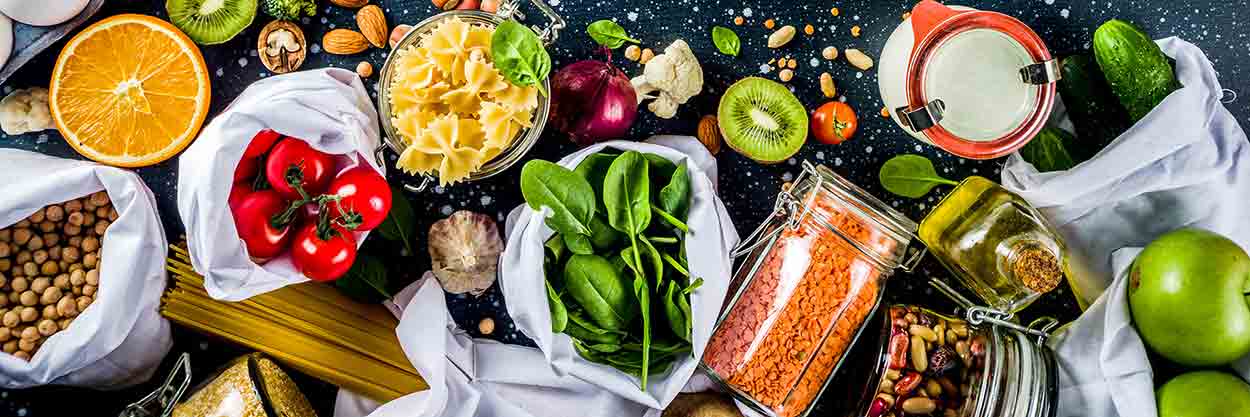
Modified atmosphere packaging across cheese, snack food, coffee, pet food, salad, condiment, and beverage lines.
What we do
Modified atmosphere packaging (MAP) replaces the air inside a food package with a defined blend of inert gases, extending shelf life up to five times compared to air-packed product. On-site nitrogen generators produce the nitrogen volume that every MAP line depends on, feeding directly into gas blenders, gas flushing stations, tray sealers, and form-fill-seal machines. Gas Generation Solutions designs and installs MAP nitrogen systems for cheese, snack food, coffee, salad, condiments, pet food, bakery, meat, seafood, and beverage packagers. Our systems cut nitrogen costs by up to 90% compared to delivered nitrogen, pay back in 12 to 14 months, and run for 20 years or more.
Gas Generation Solutions was incorporated in 1979 and has over 40 years of industry experience. Our USA-built systems ship across the United States, Mexico, and Canada. For the broader food and beverage picture, see our food grade nitrogen generator cornerstone.
Systems in the field
Deployed MAP nitrogen systems
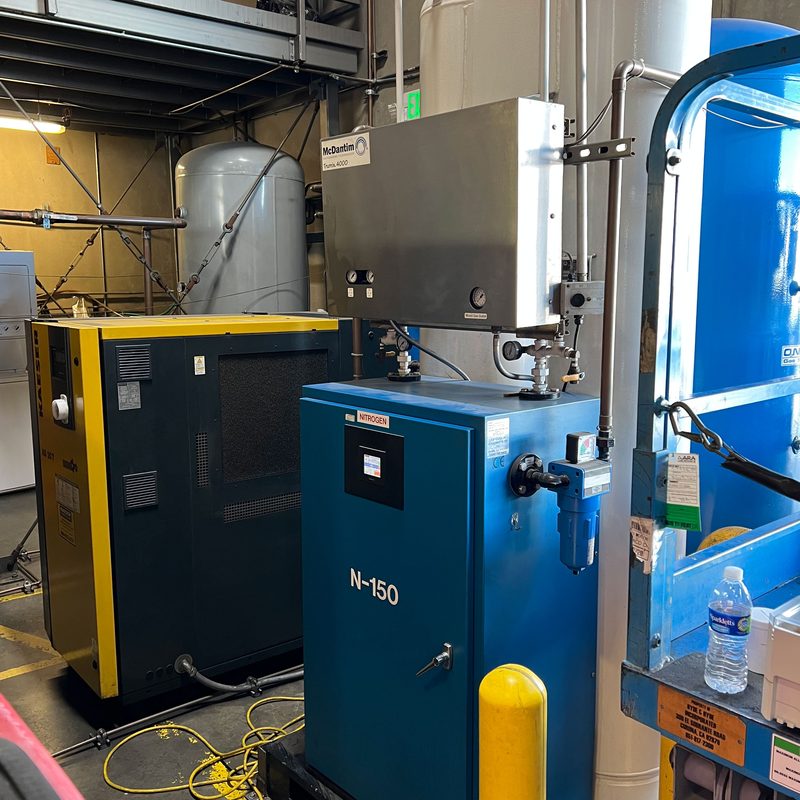
Complete MAP system
Compressor, PSA generator, McDantim Trumix gas blender, and buffer tank
A complete on-site MAP gas system in one frame: Kaeser air compressor feeds the PSA nitrogen generator, which feeds the McDantim Trumix blender on top. The blender mixes nitrogen with delivered CO₂ to the customer’s target ratio and delivers the finished blend at packaging-machine inlet pressure.
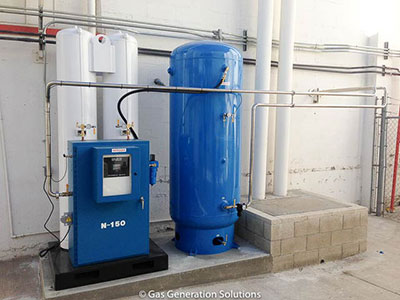
Cheese & dairy install
PSA generator at a cheese and dairy packaging facility
Plumbed into a tray-sealer line with a buffer tank between generator and blender to absorb peak demand spikes.
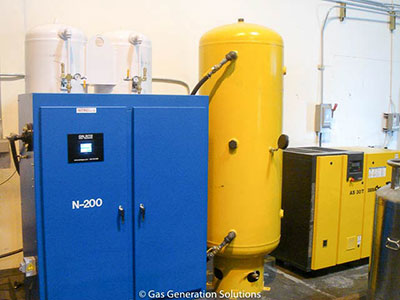
Shredded cheese line
Generator feeding a shredded cheese MAP packaging line
70/30 N₂/CO₂ blend at the bagger headspace; one generator supplies the full shredded-cheese product mix.
Applications
How nitrogen is used in food packaging and MAP
A correctly sized on-site generator supplies every nitrogen point of use across a multi-line MAP plant from a single source: gas blenders, tray sealers, VFFS lines, thermoformers, flow wrappers, can dosing, and bulk inerting.
Gas blender feed (N₂/CO₂ blends)
Generator feeds a gas blender at 80 to 120 psig. Blender controls flow ratios to the target blend (60/40, 70/30, etc.) and delivers the finished mix to the packaging machine.
Tray sealer and thermoformer flushing
Tray sealers and thermoformers flush nitrogen or N₂/CO₂ blend into the sealing chamber before the lidstock is applied. The dominant format for sliced meat, cheese, ready meals, and seafood.
VFFS pillow-bag flushing
Vertical form-fill-seal baggers run from snack food to coffee to pet food to shredded cheese. Nitrogen flushes the bag headspace before sealing on every pillow-pack format.
Can dosing and HFFS
Liquid nitrogen dosing into aluminum cans for pressurization and oxygen scavenging. Horizontal form-fill-seal flow wrappers for sliced cheese, bars, and frozen patties.
Bulk silo and hopper inerting
Nitrogen blankets bulk product upstream of packaging: coffee silos, snack food hoppers, shredded cheese intermediate totes, dry pet food bins, and nut storage. Nitrogen blanketing detail →
Process-line inerting
Nitrogen curtains and overflow blanketing on conveyors, weigh hoppers, and metal detectors between processing and packaging reduce oxygen exposure during dwell time.
One generator, plant-wide supply. A properly sized on-site system feeds every blender, every tray sealer, and every bagger across a multi-line MAP plant from one source. Adding new lines later requires only a capacity expansion rather than new delivered-gas infrastructure.
Blend ratios
MAP blend ratios by food type
Blend ratios are product-specific, tuned per packaging format and per target shelf life. The right ratio depends on the dominant spoilage pathway for the product. Common starting points by food category:
Hard & semi-hard cheese
60% N₂ / 40% CO₂
Cheddar, provolone, Monterey Jack. Higher CO₂ inhibits surface mold and aerobic spoilage.
Shredded & pizza cheese
70% N₂ / 30% CO₂
Higher nitrogen content prevents pack collapse in large-volume bags from CO₂ absorption.
Soft cheese, cream cheese, powders
100% N₂
CO₂ would dissolve into moisture and produce off-flavors.
Fresh mozzarella & ricotta
100% CO₂
Maximum mold inhibition is the priority for high-moisture fresh cheese.
Chicken & poultry
70% N₂ / 30% CO₂
Standard for case-ready packaged poultry. Inhibits Pseudomonas and other psychrotrophs.
Red meat (beef, lamb) retail
70% O₂ / 30% CO₂
High-oxygen MAP maintains the bright red oxymyoglobin color consumers associate with freshness.
Red meat (low-O₂ transit)
70% N₂ / 30% CO₂
Long-transit and export. Color reblooms when packs are opened or transferred to retail O₂ MAP.
White fish & seafood
40% N₂ / 30% CO₂ / 30% O₂
Three-gas blend; oxygen inhibits anaerobic spoilage organisms in white fish.
Salmon & oily fish
60% N₂ / 40% CO₂
Two-gas blend; oily fish do not need oxygen and rancidity is the priority risk.
Fresh pasta
70% N₂ / 30% CO₂
CO₂ inhibits surface mold on egg-based and stuffed pastas.
Bread & bakery
50% N₂ / 50% CO₂ to 30% N₂ / 70% CO₂
Higher CO₂ for soft enriched breads and crustless products. Lower CO₂ for hearth loaves and crusted breads.
Dried & cured meats (jerky, salami)
70% N₂ / 30% CO₂ or 80/20
CO₂ inhibits surface yeast and mold. Lower CO₂ for products with low water activity.
Roasted coffee (whole bean & ground)
100% N₂
Coffee self-degasses CO₂ for 1 to 2 weeks post-roast; adding CO₂ would over-pressurize the pack.
Snack food & nuts
100% N₂
Chips, pretzels, extruded snacks, nuts, seeds. Crush protection plus rancidity prevention; no need for CO₂.
Fresh-cut salad & leafy produce
80% N₂ / 15% CO₂ / 5% O₂
Respiration-balanced blend matches product respiration to delay wilting without driving anaerobic off-flavors.
Sized to total plant demand. Our team sizes the nitrogen generator output to match peak simultaneous MAP demand across all product lines and blends. One generator can supply 100% N₂ lines, 70/30 lines, and three-gas blends in parallel from a single source.
Purity & residual O₂
Two purity tiers cover MAP. Finished-pack residual oxygen drives shelf life.
Generator nitrogen purity
99.5% covers most MAP, 99.9% for premium and extended-shelf-life
Nitrogen purity for MAP is measured as percent N₂ with the balance reported as residual oxygen in parts per million.
5,000 ppm O₂
Standard tier covering shredded cheese, snack food, salad, condiments, coffee, pet food, and most retail-format packaging.
1,000 ppm O₂
Premium tier for dairy with extended refrigerated shelf life, wine bottling, and any product with residual oxygen targets below 0.5% in the finished pack.
Residual O₂ in finished pack
Three target tiers, verified inline at the QC station
Finished-pack residual oxygen, measured in the headspace of the sealed package, is the metric that actually drives shelf life. Verified inline or at the QC station using Mocon MAP Check, Dansensor CheckMate, Systech, or Witt MAPY analyzers.
Standard MAP
Standard shredded cheese, snack food, coffee, sliced meat. Achievable with 99.5% generator purity and standard gas flushing.
Premium & extended shelf life
Extended-shelf cheese, high-PUFA snacks, wine bottling. 99.5% purity plus upgraded flushing (double flush, extended dwell, snorkel nozzles).
Ultra-premium & export
Extended-distribution dairy, oxygen-sensitive biologics, export formats with long transit. 99.9% purity plus optimized flushing.
Equipment compatibility
Built for every major MAP gas blender and packaging OEM
Our nitrogen generators feed every common gas blender and integrate with every common MAP packaging machine, from benchtop tray sealers to 150-bag-per-minute VFFS lines. Each machine has its own inlet pressure, flow, and purity spec; we review the spec sheet, match the generator output to peak simultaneous demand, and confirm compatibility before quoting.
Gas blenders
Packaging OEMs
Sizing & ROI
Sized to measured demand, paid back in 12 to 14 months
MAP plant tiers
Nitrogen consumption by operation size
Small artisanal plant
One tray sealer or VFFS line. Specialty cheese, craft snack, small-format MAP.
Mid-size MAP plant
Two to four MAP lines across mixed formats (tray seal, VFFS, flow wrap).
Large multi-line MAP plant
Snack, coffee, cheese, dairy, or meat at high line speeds across multiple SKUs.
Whole-facility producer
Central nitrogen distribution to multiple MAP lines, blenders, and bulk inerting stations from one source.
Sizing by nameplate on packaging equipment typically overstates demand because simultaneous peak flush events across lines are rare. Our free flow meter rental with cellular data logger captures real plant demand over days or weeks of normal production. Measured data drives sizing.
Cost & payback
Up to 90% lower gas cost vs delivered nitrogen
12–14 mo
Typical payback
20+ yr
Service life
$10,000 to $500,000+ system price range, from a single tray sealer to whole-facility central distribution.
Delivered nitrogen for MAP carries compounding costs: gas charges, cylinder or dewar rental, hazmat fees, delivery surcharges, low-pressure minimums, and 2 to 8% per day boil-off from idle liquid tanks. On-site generation eliminates all of them. Recurring cost is electricity for compressed air plus routine filter changes. Over a 20-year service life, cumulative savings on a mid-size MAP plant commonly reach several hundred thousand to over a million dollars.
Food safety & shelf life
Up to 5x shelf life from a consistent gas supply
Nitrogen used in MAP and food packaging is food-grade inert gas, listed as Generally Recognized As Safe under FDA 21 CFR 184.1540. It displaces oxygen, the primary driver of food spoilage, slowing every oxidation pathway and many microbial growth pathways at once.
- Oxidative rancidity:slowed across fats, oils, and natural lipids in every food category
- Aerobic bacteria & mold:inhibited by reduced O₂ and elevated CO₂ in MAP blends
- Pigment & vitamin retention:protected from oxidative breakdown
- Retail appearance:maintained pack volume, no crush, visible product integrity
Maintenance
Three filter changes a year, no service contract required
MAP nitrogen generators require minimal routine maintenance. Plant maintenance teams perform filter changes themselves. Annual filter cost is typically a few hundred dollars depending on system size.
- Every 3 months:water and dirt filter change
- Every 6 months:oil filter change, valve and safety device inspection
- Every 12 months:charcoal final filter change
- Sealed sieve beds:no top-off required under normal operation
Related pages
Food grade context and product-specific MAP spokes
MAP packaging is the sub-hub for every F&B page. Go up to the food grade cornerstone, or across into the product-specific page that matches your packaging line.
Dairy & Milk
100% N₂Milk, cream, cultured dairy, beverages, powders.
Cheese
60/40 · 70/30Shredded, sliced, block, grated, bulk.
Snack Food
100% N₂Chips, jerky, nuts, popcorn, trail mix.
Coffee
100% N₂Whole bean, ground, pods, RTD, cold brew.
Salad & Lettuce
80/15/5Spring mix, baby greens, romaine, slaw, kits.
Salad Condiments
PouchesDressings, sauces, kits, single-serve packets.
Pet Food
100% N₂Dry food, treats, birdseed.
Shelf Life Data
ReferenceMeasured shelf life gains by food category under MAP.
Frequently asked
Questions about food packaging and MAP nitrogen generators
What is modified atmosphere packaging?
Modified atmosphere packaging (MAP) is the replacement of air inside a food package with a controlled mixture of inert gases, typically nitrogen and carbon dioxide. The blend displaces oxygen and inhibits microbial growth, extending shelf life up to five times compared to air-packed product. MAP maintains package volume (unlike vacuum packaging), which protects fragile products and preserves retail appearance.
What gases are used in MAP for food?
The three primary MAP gases are nitrogen, carbon dioxide, and oxygen. Nitrogen is the inert filler that maintains package volume and displaces oxygen. Carbon dioxide inhibits mold and aerobic bacteria. Oxygen is retained in specific blends for red meat color and some fresh fish applications. Argon is used occasionally for wine, beer, and premium oils. Nitrogen and CO2 together make up most food MAP blends.
What nitrogen and CO2 blend ratio is used for cheese and other foods?
Blend ratios are product-specific. Hard cheese typically uses 60% N2 / 40% CO2, shredded cheese 70% N2 / 30% CO2, soft cheese 100% N2, and fresh mozzarella 100% CO2. Coffee, snack food, and nuts use 100% N2. Chicken and pasta use 70% N2 / 30% CO2. Red meat retail packs use 70% O2 / 30% CO2. Bread and bakery use 50% N2 / 50% CO2 to 30% N2 / 70% CO2. The right blend depends on the dominant spoilage pathway for the product.
What nitrogen purity is needed for food packaging and MAP?
Most MAP applications run at 99.5% nitrogen purity (5,000 ppm residual oxygen). Premium applications including extended-shelf-life dairy, wine bottling, and export formats push to 99.9% (1,000 ppm residual oxygen). Food packaging does not require nitrogen purity higher than 99.9%. Residual oxygen in the finished pack depends on flush efficiency and seal integrity more than on generator purity past 99.9%.
How does a nitrogen generator integrate with a MAP gas blender?
The nitrogen generator feeds the blender at a defined inlet pressure (typically 80 to 120 psig). The blender reads separate N2 and CO2 supply pressures, controls flow ratios to the target blend (for example, 70% N2 / 30% CO2), and delivers the finished mix at the packaging machine inlet pressure. Our generators integrate with every common MAP blender, including Dansensor (Mocon), Witt, PBI Dansensor, Servomex, McDantim, and OEM-integrated blenders in tray sealers and thermoformers. For 100% nitrogen applications (coffee, snack food, pet food), no blender is needed; the generator feeds the packaging machine directly.
What is the target residual oxygen level in a MAP package?
Typical targets are under 2.0% headspace oxygen for standard MAP, under 1.0% for premium and extended-shelf-life applications, and under 0.5% for ultra-premium and oxygen-sensitive products. Residual oxygen is verified with Mocon, Dansensor CheckMate, Systech, or Witt analyzers at the quality check station or inline on every pack.
How much does a nitrogen generator for food packaging cost?
Nitrogen generators for MAP and food packaging typically range from approximately $10,000 for a small artisanal line to over $250,000 for a multi-line commercial MAP plant. Whole-facility systems supplying central distribution to multiple MAP lines can exceed $500,000. Price depends on flow rate, purity, delivery pressure, and redundancy. Regardless of system size, the average payback is 12 to 14 months, and the service life is 20 years or more.
Can one nitrogen generator feed multiple MAP lines?
Yes. A single generator sized to total plant simultaneous peak demand supplies multiple MAP packaging lines, multiple blenders, and bulk inerting stations from one source. A buffer tank between the generator and the distribution manifold stabilizes pressure during demand spikes. Adding new MAP lines later requires only a capacity expansion rather than new delivered-gas infrastructure. Call 760-505-1300 or contact us here for a same-day quotation.
Size Your MAP Plant System
Borrow a flow meter. Size the generator to your actual MAP demand.
We rent a flow meter at no charge, sized for MAP and food packaging service. The meter installs inline between your current nitrogen supply and your gas blender or packaging machines, with a cellular data logger so you can view flow rate and pressure in real time on our dedicated server. No WiFi required at your facility. After a few weeks of normal production we size the generator and storage to your measured peak simultaneous demand across all MAP lines, not a nameplate estimate. Most MAP plants recover their full system investment inside 14 months.
Already know your flow, purity, and pressure? Send them over with your packaging equipment list and we will return a complete quotation the same day.