Wave Soldering
Nitrogen Generator for Wave Soldering
Nitrogen blanketing the wave bath reduces oxidation buildup, extends solder bath life, and helps prevent bridging on dense through-hole assemblies.
Purity range
Single bath to multi-line facility
Less dross removal labor
Typical payback

Wave soldering is a batch assembly process where printed circuit boards pass over a container of molten solder at 250 degrees Celsius or higher. The molten solder wets the through-hole pins as the board travels over the wave crest. Nitrogen is critical because it helps minimize oxidation of the solder surface, reducing dross formation and helping prevent bridging defects on dense pin-count boards.
A nitrogen blanket nozzle floods the wave bath surface with an inert atmosphere. The nitrogen keeps the solder shiny and clean, which increases bath life and reduces the frequency of dross removal. For manufacturers processing hundreds of boards per day, dross reduction translates directly to lower solder bar consumption and fewer process interruptions.
Gas Generation Solutions supplies on-site nitrogen generators sized for wave soldering baths, from 200 to 2,000 SCFH. Our PSA systems deliver the consistent flow and purity that through-hole assembly requires. Most customers reduce nitrogen costs by up to 90% compared to cylinders and bulk supply while improving process quality and eliminating logistics overhead.
How nitrogen blankets the wave bath
Step 1
Board enters preheat zone
The circuit board moves through preheat, where flux activates and oxides on component leads reduce in preparation for solder wetting.
Step 2
Nitrogen floods the wave crest
As the board passes over the solder wave, a nitrogen blanket nozzle fills the air above the wave surface with inert gas. This minimizes oxygen reactions with the molten solder, reducing dross formation.
Step 3
Solder wets through-hole joints
The molten solder fills the through-hole connections from wave contact. Nitrogen lowers surface tension and oxidation, helping prevent bridging on fine-pitch assemblies and supporting strong, oxide-free solder joints.
Step 4
Cooling zone and bath life extension
Joints solidify oxide-free in the cooling zone. The nitrogen-blanketed bath surface stays clean, reducing dross removal labor and extending the time between major bath maintenance.
Wave bath impact and operating savings
Cleaner solder bath surface
Nitrogen blanket reduces oxidation on the molten solder surface, which means less dross forming on the bath. Less dross translates to less time spent skimming the wave surface and more consistent solder quality through the production run.
Solder material savings
Less dross production translates directly to lower solder bar consumption. Specific savings depend on baseline dross rate, wave configuration, and production volume, but the reduction is meaningful on high-volume lines.
Bridge defect reduction
Nitrogen lowers solder surface tension and oxidation, reducing bridging defects on fine-pitch through-hole boards. Fewer reflows, rework, and scrap improve first-pass yield and reduce assembly labor.
Bath life extension
Cleaner bath surface means less dross removal labor, less frequent solder additions, and fewer process interruptions. Time between major bath maintenance is extended, deferring the cost and downtime of pot service.
Customer installations
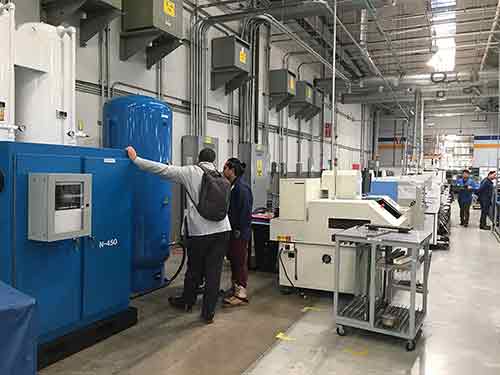
Wave soldering nitrogen generator system providing consistent flow and purity to the solder bath.
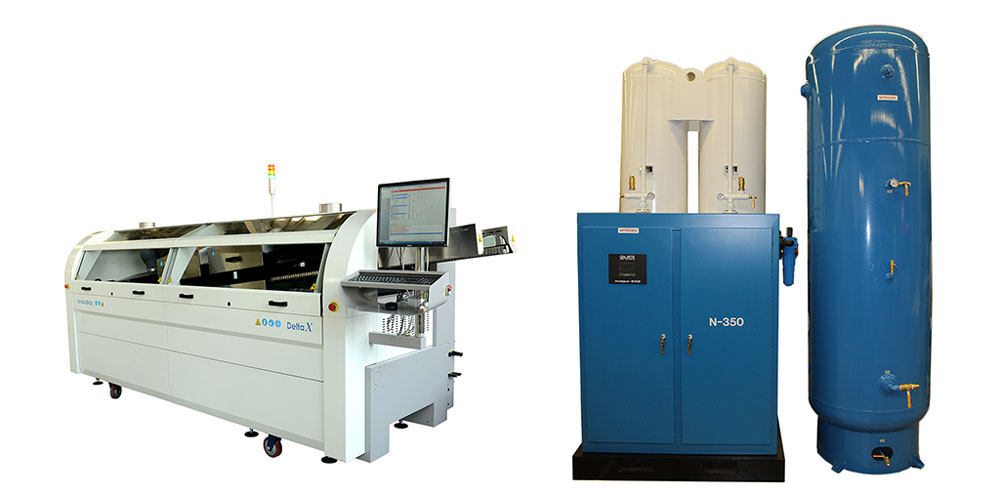
On-site nitrogen generator supplying the wave soldering line with reliable, on-demand nitrogen.
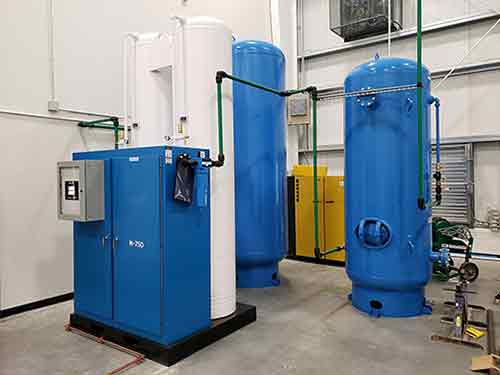
Integrated nitrogen atmosphere control system connected to the solder oven, eliminating dross and defects.
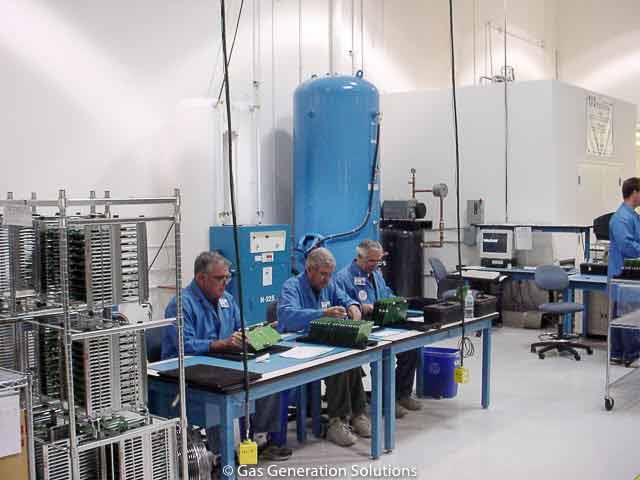
Production floor installation delivering high-purity nitrogen on-site, eliminating bulk gas logistics.
Wave soldering applications
Through-hole PCB assembly
Traditional through-hole PCB assembly where component leads pass through drilled holes and are soldered on the bottom side. Wave soldering is the standard process for high-volume through-hole production.
Automotive control boards
Automotive ECUs, power distribution modules, and high pin-count connectors require flawless solder joints. Nitrogen-blanketed wave soldering helps prevent bridging and joint defects that could cause field failures.
Telecom backplanes
Telecom equipment, switches, optical modules, and backplane connectors demand dense through-hole pin patterns. Nitrogen helps prevent bridging on fine-pitch boards and supports reliable solder wetting.
Military and aerospace boards
Avionics, military-grade electronics, and aerospace through-hole assemblies require defect-free solder joints per strict specifications. High-purity nitrogen supports compliance and repeatability.
Industrial control boards
Motor drives, power electronics, industrial PLCs, and process control boards often mix through-hole connectors with SMT components. Nitrogen wave soldering handles the through-hole portion with precision.
Leadframe and discrete assembly
Legacy through-hole discrete components, radial connectors, and leadframe die-attached leads benefit from reduced dross and extended bath life, lowering cost per unit on high-volume production runs.
Frequently asked questions
What purity does wave soldering need?
Wave soldering typically requires 99.9% to 99.99% nitrogen. 99.9% is standard for most commercial through-hole assembly; 99.99% is the top of the wave range and is used for military, aerospace, and high-reliability boards. The primary benefit of nitrogen is dross suppression and bath life extension. Wave purity sits at the same range as reflow; selective soldering runs higher because nitrogen there is a focused shroud rather than a broad blanket. Our PSA systems can deliver up to 99.9995% for specialty applications requiring purity above the typical wave range. Contact us with your board mix and historical defect data and we will recommend the right tier.
How does nitrogen reduce dross and extend bath life?
Nitrogen blanketing the wave bath reduces oxidation buildup on the molten solder surface. Less surface oxidation means less dross to skim, fewer pot interruptions for cleaning, and a longer interval between major bath maintenance. Specific reduction varies with wave configuration, nozzle design, and existing bath agitation. Each installation is different, so we conduct a site survey and test run on your equipment before finalizing system size.
Does wave soldering need a full nitrogen tunnel or just a nozzle?
It depends on your wave machine and process requirements. Some machines have integrated nozzle ports that direct nitrogen only at the wave crest. Others use a tunnel that encloses the entire wave area. Both approaches work; nozzle-only systems are simpler and cheaper, while tunnel systems give more consistent results on boards with complex underside features. We work with your equipment manufacturer to determine the right approach for your setup.
How much flow does my wave bath need?
Flow demand depends on the wave machine model, bath size, nozzle width, and conveyor speed. Most production wave machines consume 500 to 1,100 SCFH per machine, and multi-line facilities paralleling generators to 40,000 SCFH or more. We maintain a published flow-rate table covering major OEM wave machines (Kurtz Ersa, Vitronics, JUKI, Electrovert, SEHO, and others) at our wave soldering equipment nitrogen flow rates page. Contact us with your wave machine model and we will size a system to match your demand.
Can I retrofit nitrogen onto my existing wave machine?
Yes. Most wave machines can be retrofitted with a nitrogen supply, and the wave machine itself usually does not need modification. We size the air treatment and the nitrogen system to your machine's flow and purity needs and provide system drawings. On-site work is handled by the customer's qualified contractors. Contact us with your wave machine model and we will provide a sizing recommendation and a quote ready for your installer.
How does on-site nitrogen compare to dewars and bulk LIN for wave?
Cylinders cost 6 to 10 dollars per hundred cubic feet, dewars cost 4 to 6 dollars per CCF, and bulk LIN costs 0.50 to 1.50 dollars per CCF. On-site generation costs just 0.05 to 0.15 dollars per CCF, delivering up to 90 percent savings. Most customers recover their investment within 12 to 14 months. For wave soldering lines running high production volumes, on-site nitrogen eliminates the need to manage dewar inventory and scheduling, improving process reliability while cutting gas cost dramatically.
Does nitrogen affect flux choice or wave soldering process?
Nitrogen does not alter flux chemistry or wave soldering parameters. The inert atmosphere helps minimize oxidation of the solder and flux during wetting. You can use the same flux chemistry and process settings that you use today. The only visible change is a cleaner wave surface with less dross, which actually makes the process easier to maintain and produces more consistent solder joints without requiring any tuning of temperature, conveyor speed, or flux volume.
Who installs and maintains the system?
Gas Generation Solutions designs and supplies the on-site nitrogen system, sized for your wave machine and production volume. Installation is handled by the customer's qualified mechanical and electrical contractors at the customer's site, since site conditions and wave line layouts vary. We support the project with sizing, system drawings, startup procedures, and operator training. Routine maintenance, mainly filter changes, is performed by the customer; we supply replacement parts and technical guidance throughout the system's 20-year service life. If you want installation included in the quote, we can scope it as a separate line item. Contact us with your wave machine model and production schedule for sizing.