
On-Site Oxygen for Microaerobic H2S Removal in Anaerobic Digesters
Oxygen Generator for Dairy Farm Digesters
Pure on-site oxygen for biological H2S removal in dairy farm anaerobic digesters. Dose 0.5% to 3% of biogas flow into the digester headspace, drop H2S into the elemental sulfur byproduct, protect the engine, and clean up the gas before pipeline injection or RNG upgrading.
Oxygen purity range
Typical microaerobic dosing band
California dairy digester systems
Typical payback
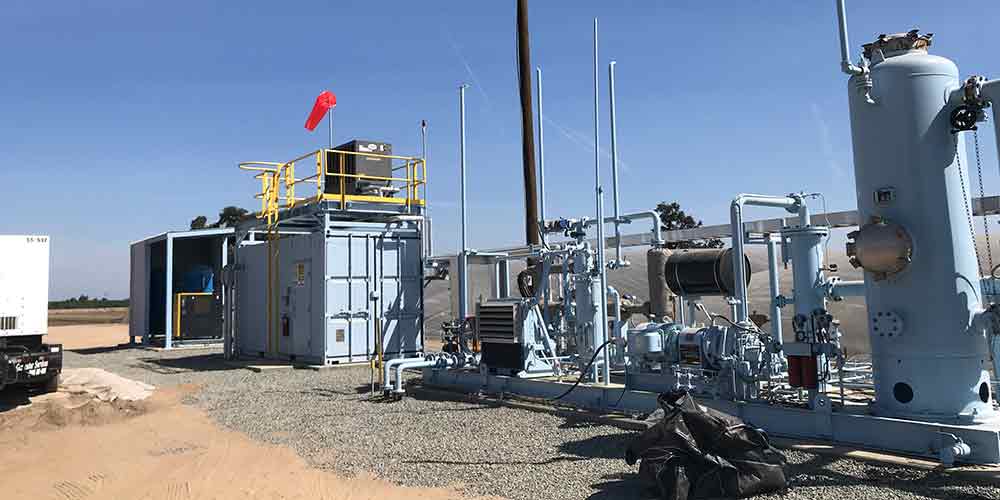
Why On-Site Oxygen for Dairy Digesters
Cleaner biogas at the lowest operating cost
Microaerobic biological desulfurization. Raw biogas from a dairy manure digester typically carries 1,000 to 3,000 ppm of hydrogen sulfide, with farm-to-farm spreads from a few hundred ppm to over 7,000 ppm. Sulfur-oxidizing bacteria already living in the digester will, given a controlled trace of oxygen in the headspace, convert that H2S to elemental sulfur. The sulfur falls into the digestate as an inert solid and the cleaned biogas leaves the digester ready for the engine, the RNG upgrader, or the pipeline. Typical dose rate is 0.5% to 3% of biogas flow as pure oxygen, and well-tuned systems hold steady H2S removal in the 90% to 99% band.
Pure oxygen instead of air. The same biological reaction works on injected air, but air is roughly 79% nitrogen. Inject 5% air to dose the digester and you have just diluted the biogas methane content by about 4%, which costs heating value at the engine and creates a real problem at the RNG upgrader where every percent of inert gas has to be removed before pipeline injection. On-site pure oxygen at 90% to 95% purity does the same dosing job with a fraction of the inert ballast, so the methane number stays where it should be.
Track record at California dairies. During the 2019 to 2020 buildout of dairy biogas projects in California, Gas Generation Solutions supplied over 30 turnkey on-site oxygen generation systems to dairy digester sites. The application is well understood, the sizing is repeatable, and the equipment is in the same envelope as the rest of the on-site PSA oxygen line.
On-site oxygen, full lineup
PSA oxygen generators from compact skid sizes through several thousand SCFH. Standard 90% to 95% line covers dairy digester dosing, aquaculture, ozone feed, and wastewater aeration.
All oxygen generators →How PSA produces oxygen from air
Pressure swing adsorption uses a zeolite molecular sieve that selectively adsorbs nitrogen, leaving an oxygen-enriched stream. The same technology that delivers nitrogen at 99.9995% delivers oxygen at up to 95% from ambient air, with no consumables in the gas path.
Learn more about PSA →Customer Installations
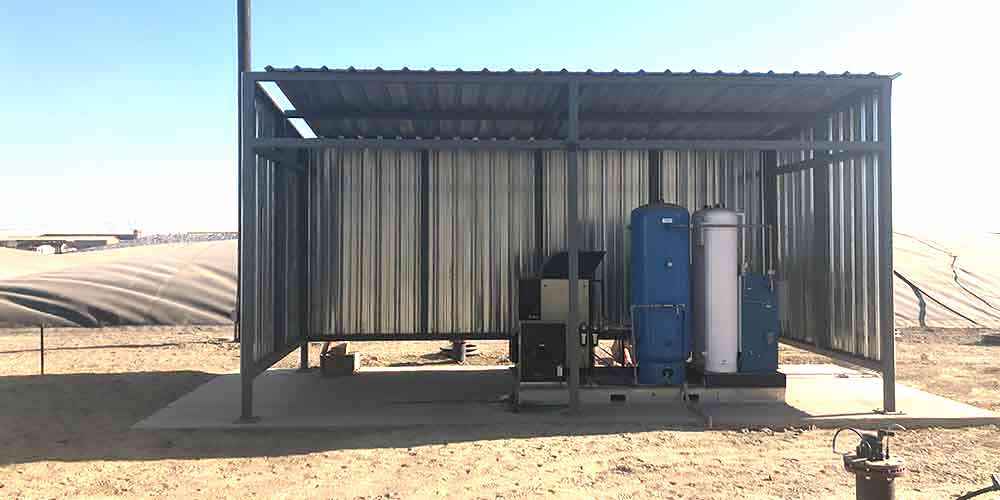
California dairy digester systems supplied by GGS
Three on-site oxygen generation systems from the 30+ dairy digester installations Gas Generation Solutions supplied during the 2019 to 2020 California biogas buildout. Each system meters pure oxygen into the digester headspace for microaerobic H2S control.


How It Works
Microaerobic biological H2S removal in four steps
Scope. This page covers in-situ headspace dosing, where pure oxygen is metered directly into the digester so the bacteria already living there do the desulfurization work. Other H2S control approaches (iron sponge, activated carbon, biofilters, water wash, caustic scrubbing) all have their place but are out of scope for this page. Microaerobic dosing is normally the first option a dairy biogas project considers because the operating cost is lowest and there is no consumable media to swap out.
Step 01
Meter pure O2 into the digester headspace
A flow controller takes oxygen from the on-site PSA generator at 90% to 95% purity and doses it into the digester headspace at 0.5% to 3% of the biogas production rate. The dose point is in the gas space above the digestate, not in the liquid. A small dose works because the reaction is biological, not chemical, and the bacteria pull H2S directly out of the gas as it forms.
Step 02
Sulfur-oxidizing bacteria do the work
Sulfur-oxidizing bacteria are already present in any anaerobic digester. With a controlled trace of oxygen available, species like Halothiobacillus and Sulfurimonas use H2S as an energy source. The reaction converts hydrogen sulfide to elemental sulfur on the digester walls, on the gas-liquid interface, and in surface biofilms.
Step 03
Elemental sulfur drops back into the digestate
Solid elemental sulfur falls into the digestate as an inert byproduct and leaves the site with the rest of the digester effluent. There is no separate sulfur cake, no spent media to dispose of, no chemical regeneration cycle. For a dairy digester whose digestate is land-applied or sent to a separator, the small added sulfur load is normally absorbed without changes to the downstream process.
Step 04
Cleaned biogas leaves the digester
The biogas exits with H2S typically reduced by 90% to 99% relative to the untreated headspace concentration. From there it goes to the engine, the CHP package, the RNG upgrader, or the pipeline injection skid. A polishing stage (small carbon bed, biofilter, or scrubber) is sometimes added downstream to meet a tight pipeline H2S spec, but the heavy load has already been knocked out at the digester.
What Proper H2S Control Prevents
Four failure modes that go away when H2S is knocked down at the digester
Untreated dairy biogas at 1,000 to 3,000 ppm H2S, burned in a CHP engine or pushed into an RNG upgrader without conditioning, will create the same four problems on every site. Microaerobic dosing addresses all four with one piece of equipment.
Sulfuric acid in the engine crankcase oil
When biogas burns, H2S converts to SO2 and SO3, which combine with combustion water to form sulfuric acid. Some of that acid blows by into the crankcase. The result is short oil change intervals, low TBN reserve, and accelerated bearing and ring wear. Lower H2S at the engine inlet means oil stays in spec longer and overhauls land closer to the OEM interval.
Hot-section and exhaust path corrosion
Sulfur compounds attack valves, exhaust manifolds, turbocharger hot sides, heat exchangers, and any metal that sees combustion products. The damage is gradual and shows up as derate, increased emissions, and unscheduled teardowns. Knocking H2S down upstream of combustion is cheaper than rebuilding hot-section parts on a CHP package.
Failed pipeline injection on RNG projects
California utilities publish a tight H2S limit at the pipeline injection point, and that limit is far below raw dairy digester biogas at 1,000 to 3,000 ppm. Off-spec gas does not get accepted. Microaerobic dosing inside the digester delivers the bulk of the H2S removal so the downstream polishing stage (small carbon bed, biofilter, or scrubber) can hold the utility spec without becoming a media-replacement bottleneck.
Runaway operating cost on consumable media
Iron sponge and activated carbon both work, but both consume media in direct proportion to the H2S load. The higher the H2S in the raw biogas, the more frequently the bed gets changed out. That is a real and recurring consumable bill on a high-flow dairy. An on-site oxygen generator runs on compressed air, has no consumable media in the gas path, and stays in service for 20 years or more.
Purity and Technology
90% to 95% oxygen is the sweet spot for digester dosing
The H2S oxidation reaction is biological. The bacteria need oxygen, but they do not need it ultra-pure. Going past 95% purity costs more compressed air per SCF of oxygen produced, without making the reaction any faster or more complete. The on-site PSA standard line tops out at 95% and that is exactly where dairy digester systems sit.
Three working purity tiers
Lower-cost dose, smallest compressor
Fully sufficient for microaerobic dosing on most dairy digesters. Lowest compressed-air consumption per SCF of oxygen. Use when the operating cost picture matters more than a small extra margin on dose precision.
Slight headroom for variable biogas flow
Modest step up from 90%. Useful when biogas production swings through the day and the operator wants a bit more dose flexibility without paying the full cost of going to 95%.
Standard PSA ceiling, most common spec
The standard line tops out here. Common spec for dairy digester dosing skids on California sites, and the same level used for aquaculture, ozone feed, and wastewater aeration. No reason to go higher for in-digester biological dosing.
Why PSA from air, and not bottled or bulk oxygen
PSA delivers continuous oxygen on a remote dairy
Pressure swing adsorption produces oxygen on-site from ambient air using a zeolite molecular sieve that selectively adsorbs nitrogen. There is no delivery schedule to manage, no tank to refill, no contract minimum, and no driver visit on a working dairy yard. Plug into compressed air and the system runs.
Air consumption rises with purity
Producing 90% oxygen from ambient air takes roughly 11 SCFM of compressed air per SCFM of oxygen. At 95% the ratio rises to about 14. At 99% it is closer to 19. For an application where 90% works perfectly well, paying for the larger compressor and the larger sieve bed to chase 99% is wasted capital and ongoing kilowatt-hours.
Sizing and ROI
Three numbers size the system
Microaerobic dosing is sized off the biogas flow, the dose target, and the downstream H2S spec. Each of those is a value the dairy already knows or can measure with a flow meter on the engine inlet.
Sizing inputs
Input 01
Biogas flow at the engine inlet (SCFM)
Average and peak biogas production from the digester, measured at the gas exit before the engine, RNG upgrader, or pipeline injection skid. Most dairy digesters land in the 100 to 1,000 SCFM range depending on herd size and feed program.
Input 02
Target O2 dose rate (% of biogas flow)
Typical microaerobic doses run 0.5% to 3% of biogas volume as pure oxygen. Higher H2S inlet concentrations push the dose toward the upper end of the band. Start in the middle and tune in based on H2S removal performance after start-up.
Input 03
Downstream H2S spec (engine or pipeline)
Engine and CHP manufacturers publish H2S limits in their fuel gas spec. Pipeline injection in California is held to a much tighter limit. Knowing the target tells us whether microaerobic dosing alone is sufficient or whether a polishing stage downstream is needed too.
Payback drivers
Driver 01
Replaces consumable scrubber media
Iron sponge and activated carbon both consume media in proportion to the H2S load. An on-site oxygen generator runs on compressed air, has no consumable media in the gas path, and stays in service for 20 years or more.
Driver 02
Restores OEM engine maintenance interval
Lower H2S at the engine inlet means engine oil holds TBN longer, oil change intervals stretch back toward the OEM number, and hot-section components last closer to their published service life.
Driver 03
Cleaner gas opens the RNG revenue path
For sites pursuing pipeline injection or RNG offtake, knocking H2S down at the digester is the first move. The downstream upgrader then has to work with a much smaller residual H2S load, which keeps the polishing stage small and predictable.
Worked example
Mid-size California dairy. Biogas flow at engine inlet: 350 SCFM. Target O2 dose: 1.5% of biogas flow. That works out to 5.25 SCFM of pure oxygen, or about 315 SCFH.
Sizing. An on-site PSA oxygen generator producing 300 SCFH at 95% covers the dose with a small operating margin. The build is in the same family as the systems already running on California dairies, with a packaged compressor sized for the air consumption.
Smaller dairies running 100 to 200 SCFM biogas land in the 150 to 250 SCFH oxygen band. Larger dairies at 800 to 1,000 SCFM biogas push toward the 500 SCFH end of the standard PSA range.
Not sure of your biogas flow?
Give us a call and we can go over your biogas production, current H2S, and target H2S to help determine a baseline before we size the oxygen system.
Frequently Asked Questions
Oxygen for dairy farm digesters
How much oxygen does a dairy digester need for H2S control?
Microaerobic dosing typically uses 0.5% to 3% of the biogas production rate as pure oxygen. A digester producing 350 SCFM of biogas, dosed at 1.5%, needs roughly 5 SCFM of oxygen, which sizes to a 300 SCFH on-site generator at 95% purity. Smaller dairies in the 100 to 200 SCFM biogas band typically size for 150 to 250 SCFH of oxygen. The exact dose is tuned in after start-up based on H2S removal performance.
Why pure oxygen instead of injecting air?
Air is roughly 79% nitrogen. Inject 5% air into the digester and the biogas methane content drops by about 4%, which reduces engine heating value and creates a real problem at the RNG upgrader where every percent of inert gas has to be removed before pipeline injection. Pure oxygen at 90% to 95% does the same biological dosing job with a fraction of the inert ballast, so the methane number stays where the engine and the upgrader want it.
Does microaerobic dosing affect methane production?
At the dose rates used for H2S control, the oxygen is consumed by the sulfur-oxidizing bacteria in the headspace before it can interfere with the methanogens in the digestate. Field studies on full-scale digesters with controlled headspace dosing have shown stable methane yield alongside high H2S removal. Overdosing oxygen can be a problem, which is why the dose is metered with a flow controller and tuned to match biogas production.
What H2S removal efficiency can I expect?
Microaerobic dosing routinely holds 90% to 99% H2S removal in full-scale dairy and sludge digesters with proper dose control. The exact number depends on inlet H2S, dose rate, mixing, and biofilm development time. The first few weeks after start-up usually show progressive improvement as the sulfur-oxidizing bacteria population grows on the headspace surfaces.
What happens to the elemental sulfur byproduct?
The bacteria oxidize H2S to elemental sulfur (S°), which falls into the digestate as an inert solid. There is no separate sulfur cake to manage, no spent media to dispose of, and no chemical regeneration cycle. For a dairy digester whose digestate is land-applied or sent to a separator, the small added sulfur load is normally absorbed without changes to the downstream process.
What oxygen purity do I need? Is 99% better?
No. The H2S oxidation reaction is biological and the bacteria do not need ultra-high purity oxygen. The standard PSA line at 90% to 95% is the right specification for digester dosing. Going to the 99% high-purity oxygen line costs significantly more compressed air per SCF of oxygen produced, larger sieve beds, and higher capital cost, with no benefit to the H2S reaction.
What if my biogas H2S is much higher than 3,000 ppm?
Microaerobic dosing handles inlet H2S well into the multi-thousand ppm range, but very high concentrations may need a larger dose at the upper end of the 0.5% to 3% band, plus a downstream polishing stage to meet the engine or pipeline spec. Tell us your measured inlet H2S and your target outlet H2S and we will size the generator and recommend whether a polishing step is needed too.
How does this compare to iron sponge or activated carbon?
Iron sponge and activated carbon both work, and both are good polishing options downstream of a microaerobic stage. The trade-off is that they consume media in proportion to the H2S load. The higher the H2S in the raw biogas, the more frequently the bed gets changed out. Microaerobic dosing carries the bulk of the removal load with no consumable media in the gas path. The on-site oxygen generator runs on compressed air and is in service for 20 years or more.
Send four numbers and we will size the system
Biogas flow at the engine inlet (SCFM, average and peak), current H2S concentration in the raw biogas, target H2S concentration at the engine or pipeline injection point, and the downstream destination (engine, RNG upgrader, or pipeline). With those four numbers, we can recommend the on-site oxygen generator size and whether a polishing stage is needed downstream.
Request a quote →Over 30 turnkey on-site oxygen generation systems supplied to California dairy digester sites during the 2019 to 2020 buildout. The application is well understood and the sizing is repeatable.