
Nitrogen for aerospace and industrial autoclaves
Nitrogen Generator for Autoclaves
On-site nitrogen for autoclave pressurization. Replaces delivered cylinders, dewars, and bulk liquid nitrogen with continuously generated nitrogen at cure pressure for aerospace composite cure, vulcanization, and pressure-cure operations. Sized with buffer vessels and booster storage to meet large peak fill demand.
Purity range available
Inert atmosphere at pressure
Typical payback
Service life
Autoclaves cure parts under controlled pressure and heat. Aerospace composite layups cure under a vacuum bag inside the chamber; vulcanized rubber, laminated glass, and industrial composites cure loaded directly without bagging. All share the same chamber-side cycle: load, pressurize, ramp to cure temperature, hold, then cool. Replacing delivered cylinders, dewars, and bulk liquid nitrogen with on-site generation gives the chamber a dry, inert pressurization gas continuously and at lower cost.
Gas Generation Solutions designs on-site nitrogen systems for aerospace composite cure shops, industrial autoclave operators, and pressure-cure facilities. Most aerospace composite cure cycles run at 99% to 99.9% nitrogen; lower-spec autoclave applications such as vulcanization, glass lamination, and general industrial cure run at 95% to 99% on membrane systems. Our PSA and membrane systems cover the full 95% up to 99.9995% range and are sized with buffer vessels and booster storage to absorb the large peak fill demand at the start of every cycle. In business since 1979, we serve aerospace cure shops and other autoclave operators across the United States, Mexico, and Canada.
Below, we cover the autoclave cure cycle, the defects nitrogen prevents, purity tiers and technology choice, peak-demand sizing, and payback economics.
Customer installs and autoclave references
GGS nitrogen for autoclave operations
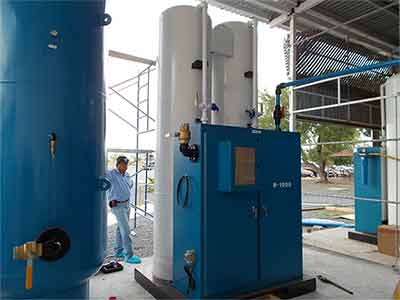
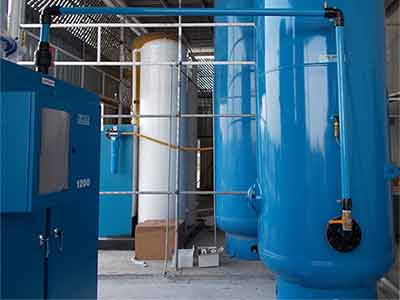
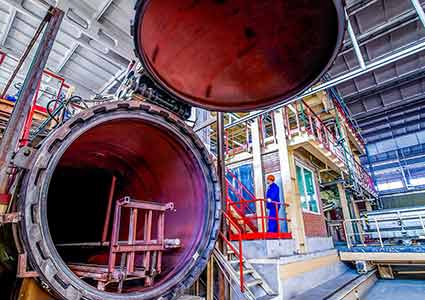
Two GGS customer installations followed by two reference photos of autoclave cure operations. Every system is sized to chamber volume, peak fill rate, operating pressure, and the cure schedule for the parts being processed.

How nitrogen runs the cure cycle
Where nitrogen acts across the composite cure cycle
Aerospace composite cure is the headline autoclave application for nitrogen. The cycle below describes how a prepreg layup is cured under vacuum bag and chamber pressure. Vulcanization, glass lamination, and other autoclave processes follow a similar pressurize, soak, and cool pattern without the vacuum bag.
STEP 1
Load the bagged part into the chamber
The composite layup is built on tooling and sealed under a vacuum bag with breather and release film during part prep. The bagged tool is rolled into the autoclave and a vacuum line on the bag is connected to a port on the chamber wall.
STEP 2
Pull bag vacuum and pressurize the chamber
The vacuum line evacuates the bag, consolidating the laminate against the tooling. The autoclave chamber pressurizes with nitrogen toward the cure setpoint. Operating pressure is typically 80 to 100 PSIG for standard epoxy prepreg cure and runs higher for high-pressure prepreg systems. The bag holds vacuum on the part while the chamber holds pressure on the bag.
STEP 3
Ramp to temperature and soak
The autoclave heats the chamber to the cure temperature for the resin system. Common epoxy prepregs cure between 250 and 350 degrees Fahrenheit; bismaleimide and high-temperature systems run higher. The chamber holds at temperature and pressure for the soak time defined by the resin specification.
STEP 4
Cool down under pressure and vent
Once the cure soak is complete, the autoclave ramps temperature down while holding chamber pressure to keep the laminate consolidated. After the part has cooled below the resin glass transition, the chamber vents the nitrogen, the bag is removed, and the part is unloaded for trim and inspection.
Where nitrogen matters most: The autoclave is hot, sealed, and pressurized. Compressed air at temperature carries oxygen and moisture into contact with curing resin and hot tooling. Nitrogen replaces that air with a dry, inert atmosphere across the full cure cycle so the chemistry of the cure is not competing with oxidation at the part surface. The same chamber pressurization, soak, and cool-down logic applies to vulcanization, glass lamination, and other autoclave processes that load parts directly without a vacuum bag.
Why nitrogen at pressure
Why composite cure runs under nitrogen
Inside an autoclave at temperature and pressure, oxygen and moisture in the chamber react with curing resin, hot tooling, and metal interfaces. Nitrogen pressurization removes oxygen and moisture as variables in the cure environment.
Surface oxidation on the cure
Oxygen in contact with curing resin disrupts the chemistry at the part surface. The result is surface defects that require additional rework or scrap on a high-value layup. A nitrogen atmosphere keeps oxygen off the laminate while the resin crosslinks.
Moisture in the cure chamber
Moisture in the pressurization gas drives porosity in the laminate and surface defects on the part. On-site nitrogen is generated from compressed air dried to a controlled dewpoint at your facility, so the gas reaching the chamber is consistently dry across every cure cycle without batch variation from delivered supply.
Combustion and ignition risk
A hot, pressurized vessel with free oxygen is a more reactive environment than the same vessel pressurized with inert nitrogen. Aerospace cure shops and high-temperature operators specify nitrogen pressurization to remove oxygen from the cure environment as a safety measure.
Higher scrap and rework rates
Surface defects and porosity show up at part inspection. On a high-value composite part, a cure-cycle defect can scrap an entire layup. Nitrogen pressurization removes oxygen and moisture as cure-environment variables, contributing to cycle-to-cycle consistency.
Purity and technology
Match purity to the resin system and the cure spec
Most aerospace composite cure runs at 99% to 99.9% nitrogen. Lower-spec autoclave applications run at 95% to 99% on membrane systems. Specialty cure schedules with ppm-level oxygen limits push higher.
Lower-spec tier
95% to 99%
Membrane for non-aerospace cure
- Vulcanization, glass lamination, and general industrial cure
- Lower-spec composite work without aerospace cure-atmosphere requirements
- Lowest cost per cubic foot of generated nitrogen
- Membrane or low-purity PSA
Most aerospace cure
99% to 99.9%
Aerospace composite cure standard
- Aerospace primary structure with strict cure-atmosphere control
- Standard epoxy prepreg, bismaleimide, and high-temperature resin systems
- Plants that share the same generator with adjacent inerting uses
- PSA system sized to the highest-purity demand
Specialty tier
99.99% to 99.9995%
Ultra-low oxygen specifications
- Specifications calling for tighter ppm-level oxygen limits in the cure atmosphere
- Plant also runs vacuum heat treating, metal 3D printing, or laser cutting on the same supply
- Cure schedules where oxygen pickup is part of the qualification record
- PSA with carbon polishing or specialty filtration
PSA versus membrane for autoclave pressurization
Choose membrane when
- Purity needed is 95% to 99%
- Vulcanization, general industrial cure, or low-spec composite work
- Lowest capital cost is the priority
- Plant footprint or maintenance simplicity matters more than peak fill rate
Choose PSA when
- Purity needed is 99% or higher
- Aerospace prepreg cure with strict atmospheric controls
- The same generator is feeding heat treat, vacuum heat treating, or other inerting on the plant
- Specifications call for tighter oxygen limits at the part surface
Sizing and economics
Size for the peak fill, not just the average draw
Autoclave duty cycles have very high peak-to-average flow ratios. The chamber pulls a large volume of nitrogen during pressurize, then almost nothing during the soak. Sizing has to account for the peak fill rate, the buffer storage that absorbs it, and the operating pressure the cure schedule requires.
Three things we ask for sizing
Peak fill volume and rate
Chamber volume multiplied by the operating pressure ratio defines the standard cubic feet of nitrogen needed at every pressurize step. The fill window from cycle start to cure pressure sets the peak SCFM the system has to deliver. We use measured flow data from a free cellular flow meter rental on your existing line to size to your actual draw.
Buffer and booster storage
A continuous-duty PSA generator paired with a large buffer vessel and a booster compressor stores nitrogen at higher pressure between cycles, then releases it on demand during pressurize. The receiver and booster are sized so the chamber reaches cure pressure within the cycle window without starving on peak draw.
Operating pressure ceiling
Standard epoxy prepreg cure runs at 80 to 100 PSIG. High-pressure prepreg systems and specialty cure schedules run higher. Tell us the cure pressure for your highest-spec part and we will size the booster and storage so peak draw never drops the chamber below the cure setpoint.
Payback economics
Cost reduction vs. delivered cylinders, dewars, and bulk liquid nitrogen
Typical payback for a multi-cycle autoclave operation
Service life with sealed sieve beds and routine maintenance
Not sure what your autoclave actually pulls? Rent a flow meter free
We rent cellular data-logging flow meters at no cost. Install on your existing nitrogen line for a few cycles and get an exact peak-and-soak profile before sizing.