
On-Site Nitrogen Generation
What are the compressed air requirements for a nitrogen generator?
A nitrogen generator runs on clean, dry compressed air. Both PSA and membrane systems need standard particulate and coalescing filtration, an air dryer, and a controlled dew point. These specs are easily met with standard compressor equipment, and an oil-free compressor is not required.
Air quality, typically Class 1.4.1
Water dew point of the supply air
Max inlet air temperature (38°C)
Oil-free compressor (a common myth)
Clean, Dry Air In, High-Purity Nitrogen Out
What kind of compressed air does a nitrogen generator need?
Whether the system is PSA or membrane, each one separates nitrogen from ordinary compressed air, so the quality of that incoming air matters. The air has to be clean and dry. The good news is that the requirements are met with standard compressor equipment, not specialty hardware.
Filtration and drying come first
The compressor should have particulate and coalescing filtration to remove oil and dirt from the air stream. The compressor also needs some form of air dryer. That can be either refrigerated or desiccant, depending on the final dew point required for the nitrogen being produced. A higher-purity, lower dew point application leans toward a desiccant dryer, while many general-purpose applications run on a refrigerated dryer.
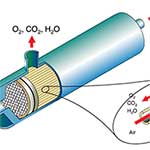
If you want to see how the air is actually separated, here is how a PSA nitrogen generator works and how a membrane nitrogen generator works.
Typical air specifications
You will typically see the following requirements for the air supplied to the generator. Each one is achievable with standard compressor filters and dryers.
-
Air temperature
Up to about 100°F (38°C) at the generator inlet.
-
Water dew point
40°F or lower, set by the nitrogen dew point you need.
-
Air quality class
Commonly cited as ISO 8573-1 Class 1.4.1.
-
Cleanliness
Free of particulate, dirt, and oil carryover.
Myth, corrected
Contrary to a common rumor, an oil-free compressor is not a typical requirement for a nitrogen generator. Standard particulate and coalescing filters handle the oil carryover from an ordinary compressor, and we supply the matching replacement filter elements and kits when those need changing.
What the air quality class means
The ISO 8573-1 Class 1.4.1 designation refers to the amount of particulate, water, and oil allowed in the air stream. It is the standard way to describe compressed air purity, and the figures above are well within reach of a properly filtered and dried shop air system.
Compressed air system for a nitrogen generator
A common arrangement uses a compressor with an integrated dryer feeding the generator directly through the required filtration. Proper nitrogen generator installation keeps this air path short and serviceable.
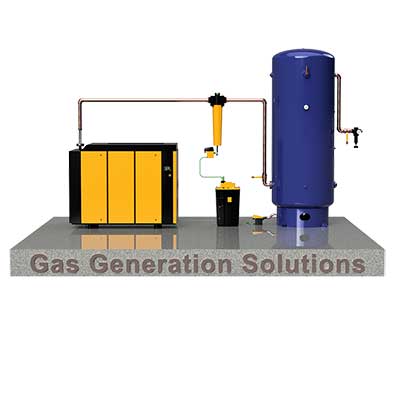
Compressed air system for a nitrogen generator.
Compressed air system with a separate air dryer
When the application calls for a lower dew point than the compressor can deliver on its own, a standalone air dryer is added between the compressor and the generator.
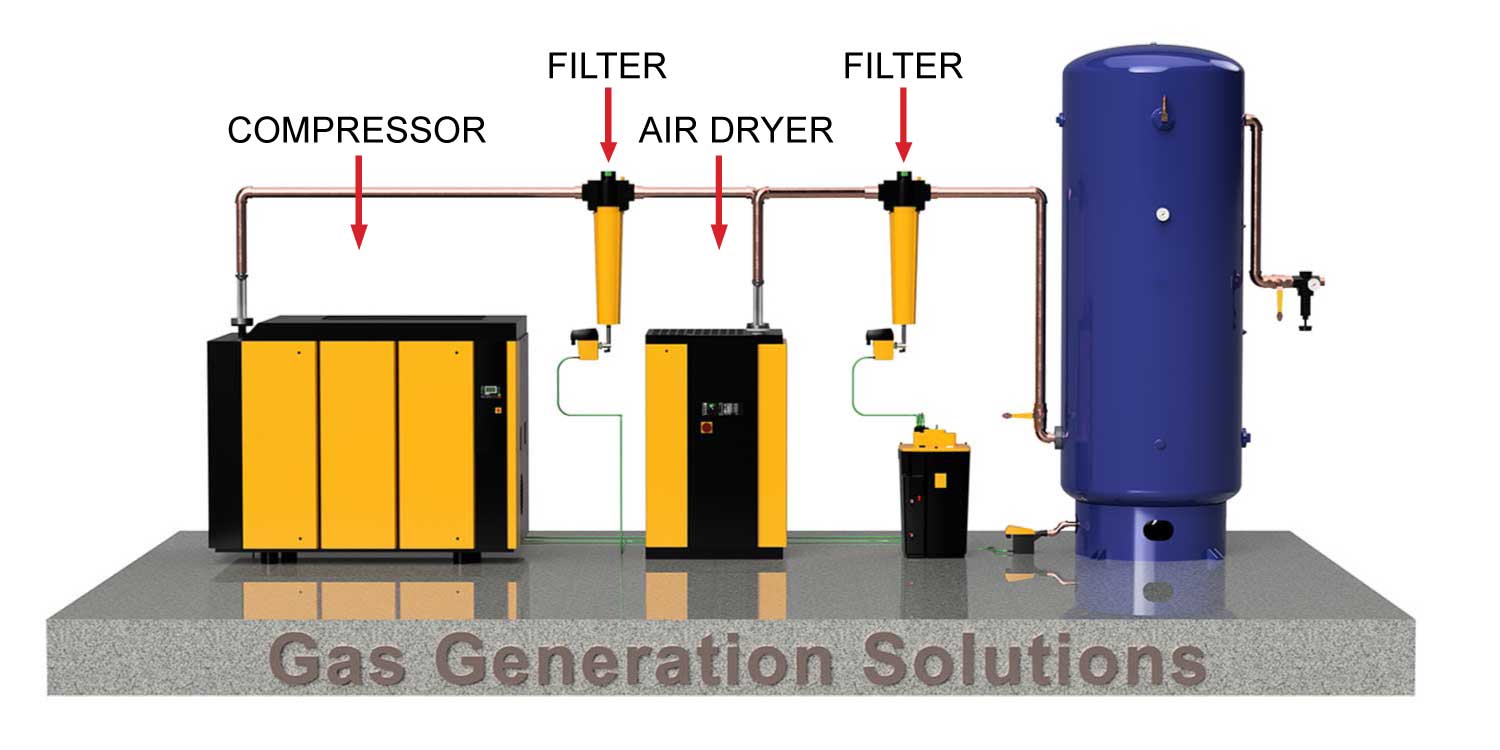
Compressed air system for a nitrogen generator with a separate air dryer.
Sizing the Compressor
How much compressed air does a nitrogen generator use?
A nitrogen generator pulls nitrogen out of compressed air and vents the oxygen-rich remainder, so the compressor always has to supply more air than the nitrogen you draw. The exact ratio depends on the purity and flow your application needs, which is why the compressor and generator are sized together.
Higher purity needs more air
Purity is the biggest driver of air demand. Producing nitrogen at a higher purity takes more compressed air per unit of nitrogen, because the generator works harder to strip out the remaining oxygen. As a rough guide, raising purity from 99% to 99.99% can increase air consumption by roughly 30% to 40%. Our systems produce nitrogen from 95% up to 99.9995%, so we size the compressor to the purity you actually require rather than the highest one available.
A buffer tank is part of the system
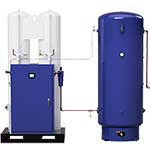
Every system includes a buffer tank. The generator stores its nitrogen there and watches the tank's purity and pressure to decide when to run and when to drop into standby. That buffer lets a right-sized compressor keep up with real demand instead of being oversized for short peaks.
Already have a compressor?
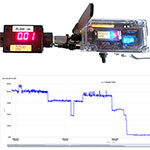
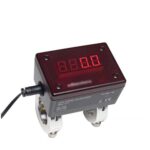
If you already run shop air, an existing compressor can often feed the generator once the right filtration and drying are in place. We confirm whether your current air is sufficient for the flow and purity you need before recommending any added equipment. When you do not know your nitrogen usage yet, we will send a flow meter at no cost to measure your real demand, then size the system around it.
Common Questions
Compressed air requirements FAQ
What quality of compressed air does a nitrogen generator need?
A nitrogen generator needs clean, dry compressed air. The compressor should have particulate and coalescing filtration to remove oil and dirt, plus an air dryer that is either refrigerated or desiccant depending on the dew point your nitrogen requires. The air quality is commonly cited as ISO 8573-1 Class 1.4.1, which describes the allowed particulate, water, and oil in the stream. These specs are easily met with standard compressor filters and dryers.
Do you need an oil-free compressor for a nitrogen generator?
No. Contrary to a common rumor, an oil-free compressor is not a typical requirement for a nitrogen generator. Standard particulate and coalescing filters remove the oil carryover from an ordinary compressor, which keeps the air clean enough for both PSA and membrane systems.
What dew point and temperature does the supply air need?
The supply air should run up to about 100 degrees Fahrenheit (38 degrees Celsius) at the generator inlet, with a water dew point of 40 degrees Fahrenheit or lower. The exact dew point is set by the nitrogen dew point your application needs, and a refrigerated or desiccant dryer is selected accordingly.
How much compressed air does a nitrogen generator use?
A generator separates nitrogen from compressed air and vents the oxygen-rich remainder, so the compressor always supplies more air than the nitrogen you draw. Higher purity needs more air: raising purity from 99% to 99.99% can increase air consumption by roughly 30% to 40%. Because of this, the compressor and generator are sized together for your specific flow, purity, and pressure.
Can I feed a nitrogen generator with my existing compressor?
Often yes. If you already run shop air, an existing compressor can feed the generator once the right filtration and drying are in place. We confirm whether your current air is sufficient for the flow and purity you need before recommending any added equipment, and we can send a flow meter at no cost to measure your real demand first.
How On-Site Nitrogen Works
Learn more about generating your own nitrogen
Clean Air In, High-Purity Nitrogen Out
Not sure your air is right? We will check it
Tell us your purity, flow, and the compressor you have, and we will confirm what filtration and drying you need and size the system to match. If you do not know your nitrogen usage yet, we will send a flow meter at no cost to measure your real demand first. No obligation.