
Nitrogen for Tank Blanketing, Pipeline Purging, and Process Inerting
Nitrogen Generator for the Oil and Gas Industry
On-site nitrogen for storage tank blanketing, pipeline and small-line purging, and refinery and gas plant process inerting. Continuous, dry, inert nitrogen replaces cylinder, dewar, and bulk liquid deliveries at terminals, midstream facilities, and processing plants.
Purity range available
Typical blanketing and purge flow band
Typical payback
Service life
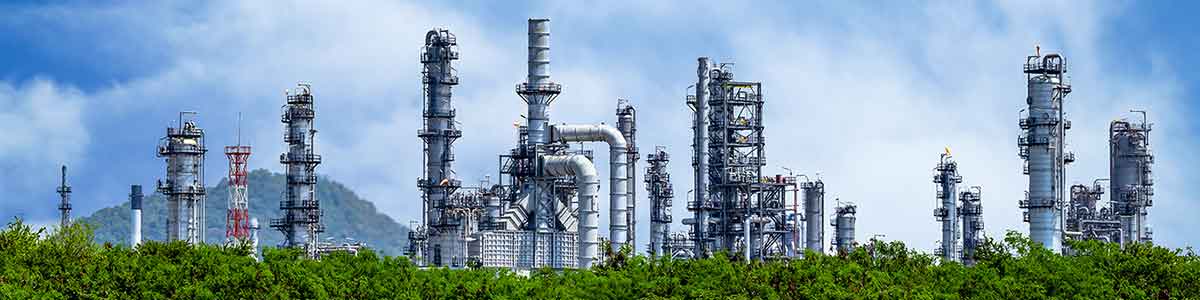
Why On-Site Nitrogen for Oil and Gas
Three places nitrogen earns its keep across an oil and gas operation
Tank blanketing and pad gas. Storage tanks at terminals, midstream gathering facilities, and refineries hold hydrocarbons that must be kept under a continuous nitrogen blanket to keep oxygen out of the vapor space. The blanket reduces oxidation of the stored product, prevents flammable headspace mixtures, and protects fixed-roof and floating-roof tanks during pump-out and breathing cycles. Demand is steady and runs every day the tank is in service. Nitrogen blanketing detail →
Pipeline and small-line purging. New pipelines, manifolds, and process loops have to be purged of air with nitrogen before they see hydrocarbons. The same purge step is required after maintenance work or before a hydrostatic test. Purge volume and duration depend on the line geometry, but for the small to mid-diameter lines and process piping that on-site systems are sized for, the work can be planned and run from the plant rather than booked as a one-off truck call.
Refinery and gas plant process inerting. Reactors, columns, knockout drums, and intermediate vessels need a nitrogen blanket during turnarounds, between batches, and whenever a vessel is opened or de-inventoried. The same nitrogen feed supports compressor seal gas at gas processing plants, instrument purges, and assist gas in flare and vent systems. On-site generation turns this into a metered utility instead of a fleet of cylinders or a bulk liquid contract.
PSA when purity matters
Pressure swing adsorption produces nitrogen at 95% up to 99.9995% by adsorbing oxygen onto carbon molecular sieves. Standard for refinery process inerting, reactor blanketing, and any application where the spec calls for very low residual oxygen.
Learn more about PSA →Membrane when 95 to 99% is enough
Hollow-fiber membranes deliver continuous nitrogen at 95% to 99% with no moving parts in the gas stream. Standard for tank blanketing, midstream pad gas, compressor seal gas, and outdoor or hazardous-area installations where a simpler skid is preferred. The same membrane skids handle marine and chemical tanker inerting.
Learn more about membrane →Equipment in service
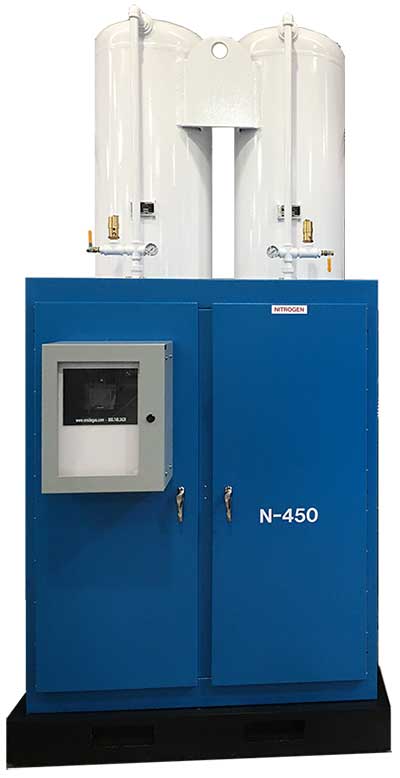
Nitrogen generation equipment for oil and gas applications

Where Nitrogen Acts in Oil and Gas Operations
Four roles a single on-site generator can cover
Most upstream, midstream, and downstream sites already buy nitrogen for two or three of the roles below. One sized PSA or membrane system at the site can supply all of them off a single header.
Role 01
Storage tank blanketing
A nitrogen pad sits on top of the stored hydrocarbon inside a fixed-roof tank. The blanket pressure is set just above atmospheric so the tank cannot pull air in during pump-out, temperature drop, or vapor-space contraction. Nitrogen demand is low and continuous during steady operation, then steps up in pulses during fill and breathing cycles. The result: hydrocarbon vapor stays out of the flammable region and the stored product stays out of contact with oxygen.
Role 02
Pipeline and small-line purging
New manifold, process loop, or small to mid-diameter pipeline gets pressurized with nitrogen and vented through a downstream point until the residual oxygen at the vent meets the spec, commonly 1% to 2% O2 for hydrocarbon service. Nitrogen flow is sized to the line volume and the desired purge time. The same procedure runs after maintenance, before a hydrostatic test, and any time a section is opened.
Role 03
Refinery and gas plant process inerting
Reactors, columns, knockout drums, and intermediate vessels get blanketed during turnarounds, between batches, and any time a vessel is opened or de-inventoried. Higher-purity nitrogen (99% to 99.9%) is typical here because residual oxygen drives catalyst poisoning, oxidative side-reactions, and vessel corrosion. The same nitrogen feed supports flare and vent assist, instrument purges, and hot-tap precautions.
Role 04
Compressor seal gas at gas processing plants
Reciprocating and centrifugal gas compressors use a continuous nitrogen seal gas feed to maintain a positive-pressure barrier between the process gas side and the atmosphere side of the shaft. Required purity is usually 95% to 97%, the duty is 24/7, and the install location is typically outdoors or in a hazardous-area enclosure. Membrane systems are common here because the purity sits in the membrane sweet spot.
Out of scope for on-site PSA and membrane. Frac and well-stimulation pumping needs nitrogen volumes well above what packaged on-site systems produce. Those jobs are run with liquid nitrogen pump trucks. The page above covers the on-site applications the systems we supply are sized for.
What Nitrogen Prevents
Four risks the blanket and purge feed take off the table
Flammable vapor space in storage tanks
Without a blanket, the vapor space above a hydrocarbon can drift into the flammable mixture range as oxygen is pulled in during pump-out and breathing. Continuous nitrogen padding holds the headspace below the lower flammable limit and removes the ignition risk at the source.
Air contamination in new and post-maintenance lines
Putting hydrocarbons into a line that still has air in it can create an in-pipe flammable mixture and damage downstream equipment. A nitrogen purge to a low residual oxygen target before commissioning or restart eliminates that window.
Catalyst poisoning and oxidative side reactions
Reactor catalysts and intermediate streams in refineries and gas plants are sensitive to even trace oxygen during opening, regeneration support, and idle periods. A higher-purity nitrogen blanket protects the inventory and shortens the restart sequence after a turnaround.
Process gas leakage at compressor shafts
Without a positive-pressure seal gas feed, hydrocarbon process gas can leak from the compressor seal into the surrounding hazardous area. A continuous nitrogen seal supply at 95% to 97% maintains the barrier whenever the compressor is running.
Pick the Right Purity, Then the Right Technology
Three purity tiers for oil and gas service
95% to 99%
Tank blanketing, midstream pad gas, line purging
- Storage tank pad gas at terminals and gathering facilities
- Pipeline and process loop purging to a 1% to 2% O2 vent target
- Pressure testing prep and post-maintenance restart purges
- Compressor seal gas at 95% to 97%
99% to 99.9%
Refinery and gas plant process inerting
- Reactor and column blanketing during turnaround
- Catalyst protection during opening and idle periods
- Intermediate vessel and knockout drum inerting
- Flare and vent assist gas where the spec calls for it
99.9% to 99.9995%
Specialty process and analyzer service
- Sensitive catalyst regeneration and high-purity reactor work
- Lab and process gas chromatograph carrier and zero gas
- Specialty chemical intermediate handling
- Calibration gas blends and instrument-grade duty
Choose PSA when
- Required purity is 99% or higher
- Application is reactor, vessel, or catalyst protection
- Plant already runs an oil-free compressed air header
- Indoor or sheltered install with normal electrical area classification
Choose membrane when
- Required purity is 95% to 99% and demand is continuous
- Application is tank blanketing, pad gas, or compressor seal gas
- Install location is outdoor, hazardous-area, or remote
- Customer prefers a simpler skid with fewer moving parts
Sizing and Payback
Right-sized for the actual flow on the header
An oil and gas nitrogen system is sized to three things: the continuous blanketing demand, the burst purge demand, and the required purity. Get those right and the rest of the equipment selection follows.
Sizing inputs we ask for
Continuous blanketing flow
Tank count, tank size, and breathing demand. Most midstream and refinery sites land between 30 and 200 SCFM continuous on the blanket header.
Burst purge demand
Largest line volume to purge in a single procedure and the time window allowed. Burst flow can sit well above the continuous baseline and is usually buffered through a receiver tank.
Purity and outlet pressure
Highest purity any user on the header requires (drives technology choice) and the header pressure the user equipment expects (drives compressor sizing and any high-pressure adder).
Payback economics
Cost shift, not capacity
On-site nitrogen typically lands around one tenth of the per-CCF cost of bulk liquid nitrogen at typical midstream and refinery flow. The savings come from cutting delivery, dewar rental, and vaporization losses.
Continuous duty helps
Tank blanketing and seal gas run 24/7. The longer the duty cycle, the faster the system pays back. Most oil and gas applications hit the 12 to 14 month payback band cleanly.
20+ year service life
PSA and membrane systems are built around long-life pressure vessels and a small set of replaceable filters. After payback, the savings continue for the remaining service life of the system.
Free flow meter to measure your actual nitrogen demand
Not sure how much nitrogen the site really uses on the blanket and purge headers? We will lend you a cellular-logger flow meter for several weeks at no charge. The data feeds back to a chart you can watch in real time, and we use it to size the system to actual demand instead of nameplate guesswork.
Request a flow meterFrequently Asked Questions
Nitrogen for oil and gas operations: common questions
What pressure does the nitrogen blanket on a storage tank actually run at?
Tank blanket pressure is set just above atmospheric, typically a few inches of water column up to a few PSI, depending on the tank rating and the pressure-vacuum vent setpoint. It is not a high-pressure application. The role of the blanket is to keep the tank from pulling air in during pump-out, temperature drop, or vapor-space contraction, not to hold the tank under high pressure.
Can an on-site generator handle frac or well-stimulation pumping?
No. Frac and well-stimulation pumping needs nitrogen volumes well above what packaged on-site PSA or membrane systems produce, and the work is normally run with liquid nitrogen pump trucks. The on-site systems we supply are sized for tank blanketing, line purging, refinery and gas plant process inerting, and compressor seal gas. If your site has a mix of on-site duty and an occasional frac contract, we will scope the on-site system to the steady demand and leave the trucked work to a pumping service.
What purity should I run for tank blanketing versus reactor blanketing?
For storage tank blanketing and most midstream pad gas, 95% to 99% is standard. The blanket only needs to hold the headspace below the lower flammable limit and keep the stored product from contacting oxygen. For refinery and gas plant reactor blanketing, run 99% to 99.9% so residual oxygen is low enough not to poison catalyst or drive oxidative side reactions during opening and idle periods.
What residual oxygen target is typical for a pipeline purge?
For hydrocarbon service, the typical purge end point is 1% to 2% residual oxygen at the vent before the line is allowed to take product. The exact spec is set by the operating company and the line service. Purge volume scales with line length and diameter; purge time depends on the inlet flow available from the on-site system or a buffered receiver.
PSA or membrane for an outdoor midstream installation?
Membrane is usually the better fit for outdoor midstream sites running 95% to 99% blanketing or seal gas duty. Hollow-fiber membranes have no moving parts in the gas stream, run continuously without a swing cycle, and are simpler to enclose for hazardous-area installation. Choose PSA when the same plant has higher-purity loads (refinery process inerting, catalyst protection) that would otherwise need a second system or a delivered-gas backup.
How fast does an on-site nitrogen system pay back at a midstream or refinery site?
Most oil and gas applications hit the 12 to 14 month payback band. The reason is duty cycle: tank blanketing and compressor seal gas run 24/7, so the cost shift away from delivered liquid nitrogen accumulates every hour. The savings come from cutting delivery, dewar or bulk tank rental, and vaporization losses, not from a lower per-CCF cost on small or intermittent flows.
Do you support hazardous-area installations?
Yes. We size and supply systems for outdoor and hazardous-area service when the customer or EPC specifies the area classification. Common requirements at midstream and gas plant sites include explosion-proof electrical components, stainless receiver tanks, oil-free compressed air with desiccant drying, and a wide ambient temperature range. Tell us the area classification on the inquiry and we will scope the system to it.
Can one generator feed tank blanketing, line purging, and process inerting off the same header?
Yes, and that is the most common configuration we quote for oil and gas sites. The system is sized to the highest-purity user on the header (usually the process inerting load) and to the sum of continuous demand plus a buffered receiver for burst purge work. Lower-purity users like blanketing and seal gas accept the higher-purity feed without complaint. One generator, one header, one set of filters and pressure vessels to maintain.
Get a sized quote for your tank farm, pipeline, or process header
Send us your tank count and blanket flow, the largest line you need to purge, the highest purity any user on the header requires, and the header pressure your equipment expects. We will come back with a sized PSA or membrane system, package code, and a cost-shift estimate against your current delivered-gas spend.
Request a quoteTalk to us before you renew the next bulk-liquid contract
Most oil and gas operators recover the on-site investment inside 12 to 14 months and run the system for 20 years or more. If your delivered-gas spend is steady, we will tell you whether on-site makes sense at your site, and if it does, we will scope the system to your actual flow data.
Contact our team