
Oxygen for Veterinary Anesthesia, Oxygen Cages, and Critical Care
Oxygen Generator for Veterinary Clinics and Animal Hospitals
On-site oxygen for surgical anesthesia, oxygen cages, post-op recovery, dental, and 24-hour critical care. Continuous veterinary-grade purity from a single source. No more cylinder deliveries, demurrage, or rotating bottle banks.
Veterinary-grade purity
Capacity, single-table GP to multi-suite referral
Typical payback
Service life
Veterinary medicine runs on the same medical oxygen as human medicine. The industry minimum for medical oxygen is 93 percent. Anesthesia machines, oxygen cages, and recovery flowmeters are designed to operate on medical oxygen at the 93 percent industry minimum or higher. Our standard oxygen generator nameplate is 95 percent ±1 percent, which means the operating envelope stays between 94 percent and 96 percent, comfortably above the 93 percent industry floor through every PSA cycle.
Many competing PSA generators are nameplated right at the 93 percent industry minimum, which leaves no headroom. The same ±1 percent cycle that keeps a 95 percent system inside veterinary-grade purity drops a 93 percent system to 92 percent at the low side of every cycle, below the industry floor. The two-point gap between 95 percent and 93 percent at the nameplate is the practical difference customers notice in year three and year five as sieve beds age, ambient temperatures shift, and compressor inlet pressure varies.
The hospital does not need 99 percent oxygen. Veterinary anesthesia, oxygen therapy, and recovery equipment is designed for medical oxygen at the industry minimum or higher, and a 95 percent ±1 percent supply meets that envelope. We do not recommend the high-purity 99 percent product line for veterinary use because it costs roughly two to three times the standard line for purity the practice cannot use. On-site oxygen replaces H and K cylinder deliveries, dewar rentals, and demurrage with a continuous source rated for 20 years or more. Most veterinary practices recover the system investment within 12 to 14 months at typical inpatient and surgical duty.
Customer installations
On-site oxygen systems at veterinary practices
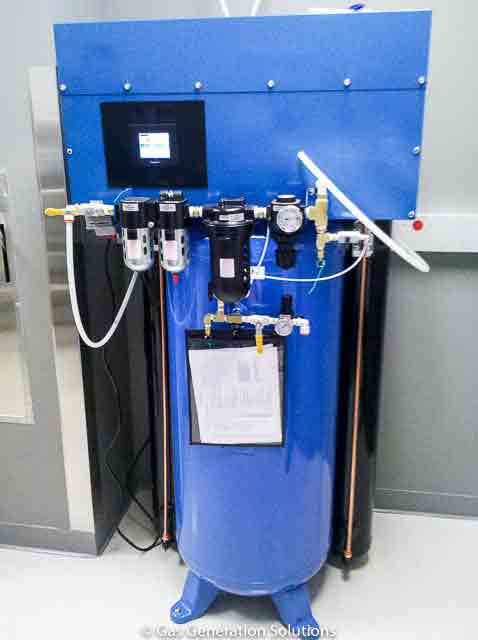
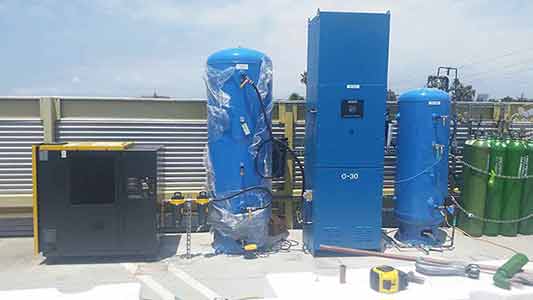
Real installations at vet clinic and animal hospital customers, sized for surgical anesthesia and continuous oxygen cage demand.
Veterinary applications
Anesthesia, oxygen cages, recovery, dental, and critical care
A single PSA oxygen system supplies anesthesia, recovery, oxygen cages, dental, and critical care across small animal, equine, exotic, and zoological practice. All applications below run on medical oxygen at the 93 percent industry minimum or higher, which is exactly what a 95 percent ±1 percent PSA generator delivers.
Small animal surgical and dental
Anesthesia and intraoperative O2
Carrier gas for inhalational anesthesia on canine, feline, and small mammal patients, including anesthesia for dental procedures. Supplies the anesthesia machine fresh-gas inlet for isoflurane and sevoflurane vaporizers. Continuous flow during the case, no bottle-change interruption mid-procedure.
Recovery and inpatient
Oxygen cages and post-op recovery
Continuous supply for recovery wards, oxygen cages, and ICU runs. Common indications include post-anesthesia recovery, brachycephalic airway compromise, neonatal support, congestive heart failure, and pulmonary edema. Inpatient oxygen runs around the clock and is the largest single driver of monthly gas use at most hospitals.
Emergency and critical care
24-hour ER and trauma stabilization
Emergency hospitals run unpredictable peak demand: simultaneous trauma stabilization, oxygen by mask or flow-by, chest tube setups, and concurrent surgical anesthesia. On-site eliminates the risk of running a tank dry during a code and removes weekend or holiday cylinder-delivery dependence.
Equine and large animal
Equine surgery, induction, and recovery
Adult horse anesthesia uses substantially higher fresh-gas flows than small animal cases, and equine recovery stalls extend supplemental oxygen for an additional period after extubation. Multi-table equine surgical centers and university teaching hospitals run sustained high-flow demand that benefits most from on-site supply.
Exotic, avian, aquatic
Exotic, avian, and aquatic medicine
Exotic and avian practice relies on chamber inductions, mask anesthesia, and small low-flow vaporizer settings. Aquatic and amphibian medicine adds oxygenated water systems and recovery containers. The same on-site supply feeds all of it without a separate small-animal versus exotic delivery contract.
Zoological and marine mammal
Zoological and marine mammal facilities
Zoo medicine, aquarium veterinary programs, and marine mammal stranding response run multi-species caseloads with periodic large-volume demand: cetacean and pinniped procedures, large carnivore immobilizations, and aquatic life support oxygenation. Larger generator cabinets size up to this duty without scaling up cylinder logistics.
Purity tiers and technology
95 percent ±1 percent: veterinary-grade with margin to spare
All veterinary anesthesia, oxygen cages, and recovery flowmeters operate on medical oxygen meeting the 93 percent industry minimum. That is the floor, not the target. Below is how the standard product line, the regulatory minimum, and the high-purity product line compare for veterinary use.
Standard product line
95% ±1%
Veterinary-grade with two-point margin above the floor
- Operating envelope 94 percent to 96 percent through every PSA cycle
- Stays above the 93 percent industry floor as sieve beds age and ambient temperature shifts
- Used by all 6 veterinary customers in our active CRM
- Fits all veterinary anesthesia, oxygen cage, recovery, and dental applications
- Capacity range from O-4 small animal GP up through O-100 multi-suite referral
Industry floor
93%
Industry medical oxygen minimum, where many competitor systems sit
- Industry minimum for medical oxygen: clinical use requires 93 percent or higher
- Many competing PSA generators are nameplated at 93 percent
- A 93 percent ±1 percent cycle dips to 92 percent at the low side, below the industry floor
- No headroom for sieve aging, seasonal compressor variation, or ambient temperature swings
Not recommended for vet
99% HP
High-purity product line, costs roughly two to three times the standard line
- Engineered for semiconductor support gases and advanced research, not vet medicine
- No veterinary anesthesia or oxygen-therapy application requires 99 percent
- Compressor sizing penalty: A/O ratio 18.7 at 99% versus 14.0 at 95%
- Zero veterinary customers in our active CRM run 99 percent
How PSA produces veterinary-grade oxygen
PSA from compressed air
A pressure swing adsorption oxygen generator pulls oxygen from compressed air using a zeolite molecular sieve. The sieve preferentially adsorbs nitrogen at pressure, then releases it at lower pressure during a regeneration cycle while a second bed produces the oxygen stream. The output runs continuously at the rated SCFH and the rated 95 percent ±1 percent purity for the rated service life of 20 years or more.
Why higher purity is not better here
Veterinary anesthesia equipment, flowmeters, and oxygen cages are designed to operate on medical oxygen at the 93 percent industry minimum or higher, which is exactly what a 95 percent ±1 percent PSA generator delivers. The 99 percent high-purity product line costs roughly two to three times the standard line at comparable capacity, for purity that no veterinary application uses.
Sizing
Three practice profiles, three cabinet ranges
Final sizing depends on simultaneous surgical tables, oxygen cage count, equine versus small animal mix, and the existing compressed air system. The numbers below show typical equipment range, not a fixed quote.
Small animal general practice
Single-location GP and 1 to 2 surgical tables
~40 to 100 SCFH at 95% ±1%
~10 to 24 SCFM compressed air
Small cabinet
One or two simultaneous surgical anesthesia cases, dental day, recovery cage. Typical equipment range starts around 19,000 dollars for the cabinet and supporting tank. Compressor sizing depends on whether the practice has existing shop air capacity that can be allocated.
Specialty and emergency hospital
Multi-doctor practice with ICU and 24-hour ER
~200 to 500 SCFH at 95% ±1%
~47 to 117 SCFM compressed air
Mid cabinet
Four to eight simultaneous oxygen demands across surgery, dental, recovery wards, and continuous oxygen-cage runs. Equipment range typically falls between 35,000 and 90,000 dollars depending on cabinet size, receiving tank, and whether a dedicated compressor package is included.
Large referral and university teaching
Multi-suite surgical referral, equine, and university teaching
~750 to 1000+ SCFH at 95% ±1%
~175 to 234+ SCFM compressed air
Large cabinet
Concurrent multi-suite surgery, equine recovery, exotic and zoological caseload, large inpatient ward. Equipment range typically falls between 80,000 and 140,000 dollars or more for the cabinet, receiving tank, and dedicated compressor package. We size larger upon request.
What we need to size your system
Send the practice profile, get a sized quote
- Number of surgical and dental tables in simultaneous use during a peak day
- Oxygen cage count and average occupancy
- Mix of small animal, equine, exotic, or aquatic caseload
- Current monthly oxygen consumption from cylinder or dewar deliveries
- Existing compressor make, model, and free air delivery, or none
Payback economics
12 to 14 months at typical hospital duty
Three drivers move the payback window. Most veterinary practices recover the full system investment within 12 to 14 months because inpatient oxygen cages run continuously, surgical anesthesia runs daily, and delivered oxygen carries embedded costs the cylinder bill does not list as a separate line.
Cost reduction vs. delivered cylinders, dewars, and bulk liquid oxygen
Typical payback at multi-shift hospital duty
Service life with sealed sieve beds and routine maintenance
Per-volume cost: delivered versus on-site
Not sure what your hospital uses?
Give us a call and we can go over your deliveries and usage to help determine a baseline before we size the system.
Frequently asked questions
What purity does veterinary medicine actually need?
Veterinary medicine uses the same medical oxygen as human medicine. The industry minimum for medical oxygen is 93 percent. Anesthesia machines, oxygen cages, and recovery flowmeters are designed to operate on medical oxygen at the 93 percent industry minimum or higher. Our standard line nameplate is 95 percent ±1 percent, which means the operating envelope stays between 94 percent and 96 percent, comfortably above the 93 percent industry floor through every PSA cycle. We do not recommend the high-purity 99 percent product line for veterinary use because it costs roughly two to three times the standard line for purity no veterinary application uses.
Can our anesthesia machines run on PSA-generated oxygen?
Yes. Veterinary anesthesia machines, vaporizers, and oxygen flowmeters from every major manufacturer are designed to operate on medical oxygen at the 93 percent industry minimum or higher. PSA-generated oxygen at 95 percent ±1 percent feeds the fresh-gas inlet exactly the same way cylinder or dewar oxygen does, and stays comfortably above the industry floor. No equipment changes are required at the anesthesia machine.
How does the system handle 24-hour inpatient and oxygen cage demand?
PSA generators are sized for continuous duty. The cabinet runs steadily as oxygen draw rises and falls across the day, with a receiving tank buffering surges from concurrent surgery, dental, and oxygen cage runs. The system does not need to be shut down overnight, and there is no cylinder-change interruption during peak emergency hours.
How big a system do we need for our practice?
Sizing depends on simultaneous surgical and dental tables during a peak day, oxygen cage count and average occupancy, equine versus small animal mix, and current monthly oxygen consumption from cylinder or dewar deliveries. A small animal general practice with one or two surgical tables typically falls in the small cabinet range. A specialty or emergency hospital with continuous oxygen cage demand falls in the mid range. Multi-suite surgical referral, equine, or university teaching hospitals fall in the large range. Send the practice profile and we will return a sized quote.
What happens if the generator goes down?
Most practices keep a small reserve of H or K cylinders connected to a manifold as backup, sized to cover surgical and inpatient demand for the period it would take a service technician to respond. The on-site system removes the routine cylinder logistics, not the medical oxygen redundancy plan. We can advise on an appropriate reserve bank as part of the system design.
Do we still need a cylinder room or bulk service contract?
Most practices keep a small reserve cylinder bank for backup. Routine bulk and dewar service contracts are typically discontinued once the on-site system is running, since the generator covers daily and inpatient demand. The reduction in monthly delivery, demurrage, rental, and surcharge costs is the largest contributor to the 12 to 14 month payback window.
Can the same generator serve a mixed equine and small animal practice?
Yes, as long as the cabinet is sized to the simultaneous peak demand. Equine surgical anesthesia uses substantially higher fresh-gas flows than small animal cases, and equine recovery extends supplemental oxygen beyond extubation. A mixed practice should size the cabinet to the equine peak rather than the small animal average, with the receiving tank covering small surges in the small animal caseload.
How long until the system pays for itself?
Most veterinary practices recover the full system investment within 12 to 14 months. Continuous oxygen cage demand and daily surgical anesthesia keep the system at high utilization, and the avoided monthly costs include cylinder gas, demurrage, monthly rental, hazmat surcharges, fuel and delivery fees, and weekend or after-hours emergency delivery charges. After payback, the marginal cost of producing oxygen is the electricity to drive the compressor and routine filter changes.