
Coffee Packaging
Nitrogen Generators for Coffee Packaging
On-site nitrogen for whole bean, ground, K-cup and Nespresso pods, canned ready-to-drink, and cold brew with nitro on tap. 99.5% to 99.9% purity feeding VFFS bag lines, pod fillers, canning lines, and silo blanketing. Up to 90% lower gas cost than delivered nitrogen, with most coffee plants paying back in 12 to 14 months.
Whole bean, ground, pods, canned RTD, cold brew across roasters, co-manufacturers, pod fillers, and nitro tap operators nationwide.
What we do
Coffee packaging depends on a continuous supply of high-purity nitrogen to displace oxygen, preserve volatile aromatics, and prevent oxidative rancidity of the natural oils that give roasted coffee its flavor. Gas Generation Solutions designs on-site nitrogen generators for roasters, coffee co-manufacturers, pod and K-cup fillers, canned ready-to-drink producers, and cold brew and nitro on-tap operators. Our systems produce nitrogen at purities from 95% up to 99.9995%, reducing gas costs by up to 90% compared to delivered nitrogen. A single roasting or packaging line often runs on a compact on-site system. Gas Generation Solutions was incorporated in 1979 and has over 40 years of industry experience. Our USA-built systems ship across the United States, Mexico, and Canada. For the broader packaging science, see our MAP nitrogen page or the food grade cornerstone.
Systems in the field
Deployed coffee packaging systems
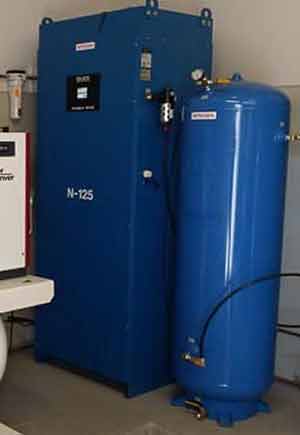
Roastery install
PSA nitrogen generator on a commercial roastery floor
Single source feeding VFFS bag lines and silo blanketing for whole bean and ground.
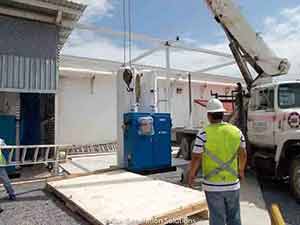
Plant install
Generator and storage tank plumbed to packaging
Buffer capacity sized to peak simultaneous demand across bag, pod, and bulk handling.
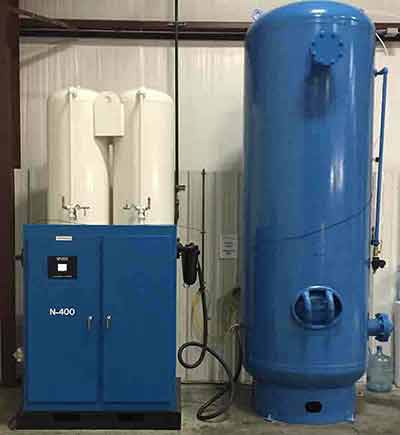
Mid-size system
Specialty roaster nitrogen system
Sized for one to three packaging lines plus modest pod or cold brew demand.
Applications
How nitrogen is used in coffee packaging
A correctly sized on-site generator supplies every nitrogen point of use in a coffee operation from a single source: bag lines, pod fillers, canning lines, cold brew tanks, nitro taps, and silo blanketing.
Whole bean and ground bag flushing
Nitrogen displaces oxygen in the headspace of retail and wholesale bags before sealing. Standard preservation method for bags with one-way degassing valves.
Pod and K-cup fill
Single-serve formats use nitrogen flush at fill to protect the small ground charge through the stamped shelf life. Standard across K-cup, Nespresso, ESE, and soft pod lines.
RTD canned coffee
Nitrogen flushes the can headspace before seaming on ready-to-drink coffee lines, preventing oxidation through ambient and refrigerated distribution.
Cold brew and nitro infusion
Nitrogen blankets brewed cold brew during steeping, packaging, and draft service. Dissolved nitrogen produces the dense, cascading texture of nitro coffee.
Bulk green and roasted blanketing
Nitrogen blankets green coffee in totes and supersacks during aging and transport, and protects roasted whole bean in silos and hoppers upstream of the packaging line.
Conveyor and degassing bin inerting
Open roasted-bean handling between cooling, grinding, and packaging uses nitrogen curtains. Pre-packaging degassing bins blanket beans for 8 to 24 hours.
One generator, plant-wide supply. A properly sized on-site system feeds every coffee packaging line, every cold brew tank, and every silo from one source. One generator replaces the complete delivered-nitrogen supply chain.
Coffee categories
Coffee formats that use nitrogen flush
Nitrogen flushing works for every shelf-stable coffee format. Each has its own optimal flush rate, residual oxygen target, and package geometry.
Whole bean bags
Retail and wholesale, with one-way degassing valves.
Ground coffee bags
Brick packs, valveless retail bags, foodservice formats.
K-cup pods
Keurig-style filter pods with foil-sealed lid.
Nespresso capsules
OriginalLine and VertuoLine compatible aluminum capsules.
Soft and ESE pods
Espresso Service Europe pods and softpak overwrap formats.
Canned RTD coffee
Ready-to-drink coffee, latte, and nitro coffee in cans.
Cold brew & nitro tap
Bottled, kegged, and on-tap nitro cold brew.
Bulk green & silo
Totes, supersacks, hoppers, and silos for green and roasted.
Sized to the full product mix. We size the generator to a coffee plant’s entire SKU lineup rather than a single line. New products and new lines slot into existing capacity rather than triggering a new gas contract.
Purity & oxidation
Two purity tiers for coffee. Aroma and oils held through the bag.
Nitrogen purity
99.5% for most coffee, 99.9% for premium and extended shelf life
Coffee packaging runs at standard food-grade nitrogen purities measured as percent N₂ with the balance as residual oxygen in parts per million.
5,000 ppm O₂
Typical for whole bean and ground coffee bags, standard K-cup and pod formats, and brick packs.
1,000 ppm O₂
Specialty single-origin, premium pod formats, canned ready-to-drink coffee, and extended shelf life programs.
Why coffee goes stale
Oxidation of aromatics and 10% to 17% oil content
Roasted coffee is one of the most oxygen-sensitive foods in common commerce. Volatile aromatics react with oxygen within days of roasting and are lost as perceptible flavor. Coffee oils oxidize into the flat, cardboard-like, or soapy notes consumers recognize as stale coffee.
Oil content by weight
Roasted coffee’s natural lipids oxidize into rancid flavor compounds when oxygen is present.
Surface area, ground vs whole bean
Grinding multiplies exposed surface roughly 10,000 times. Ground coffee oxidizes in days; whole bean in a sealed N₂-flushed bag holds 9 to 12 months.
CO₂ off-gassing window
Roasted coffee releases CO₂ for 1 to 2 weeks. One-way degassing valves vent the CO₂; nitrogen flush keeps oxygen out. The two work together, not as substitutes.
Cold brew & nitro
Two roles for nitrogen in cold brew and nitro coffee
Nitrogen does the work of inerting and the work of texturizing in cold brew operations. Both come off a single on-site supply.
- Headspace flushing. Nitrogen blankets brewed cold brew during 12 to 24 hour steeping batches and during finished-product bottling and canning. Refrigerated shelf life extends from days to weeks.
- Nitro infusion. Nitrogen is dissolved into cold brew under pressure. Pouring through a restrictor plate, widget, or nitro tap releases the gas as tiny cascading bubbles, producing the dense creamy texture associated with nitro stouts. Nitrogen is far less soluble than CO₂, which is why the bubbles are smaller and the texture thicker.
- Push gas for draft systems. Cold brew is pushed through draft systems with nitrogen rather than CO₂ or compressed air, avoiding both carbonation and oxygen contact.
Nitro-Blast nitrogen generator
Plug-and-play unit combining air compressor, filters, nitrogen generator, and buffer tank in one cabinet. Sized for coffee shops, taprooms, and small roaster-retail operations running cold brew and nitro on tap. For larger nitro RTD canning operations the same on-site approach scales: a 50 to 200 SCFH generator commonly supplies a small-batch canning line, and larger generators feed multi-canning-line RTD coffee operations. Call 760-505-1300 for sizing on your tap count and batch volume.
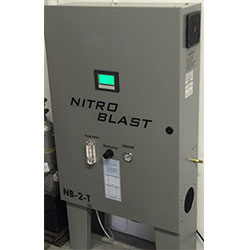
Nitrogen generator supplying nitro cold brew taps
Equipment compatibility
Built for every major coffee packaging OEM
Our nitrogen generators supply coffee packaging equipment from every major OEM, including bag baggers, pod fillers, canning lines, and specialty coffee builders. Each machine has its own inlet pressure, flow, and purity spec; we review the spec sheet, match the generator output, and confirm compatibility before quoting.
Sizing & ROI
Sized to measured demand, paid back in 12 to 14 months
Coffee plant tiers
Nitrogen consumption by operation size
Coffee shop or craft roaster
Single tap or single bag line. Nitro-Blast plug-and-play unit fits this range.
Mid-size specialty roaster
One to three packaging lines, modest pod or cold brew demand.
Regional co-manufacturer
Bag, pod, and cold brew lines under one roof, multiple SKUs.
Large commercial roaster or pod filler
Multi-line, high-speed bag and pod operations. Silo blanketing adds 50 to 300 SCFH per station.
Our free flow meter rental with cellular data logger measures actual plant consumption over days or weeks of normal production. The data logger transmits readings without plant WiFi or network access. Measured data drives sizing instead of nameplate estimates that often overstate demand.
Cost & payback
Up to 90% lower gas cost vs delivered nitrogen
12–14 mo
Typical payback
20+ yr
Service life
$10,000 to $250,000+ system price range for coffee operations.
Delivered nitrogen for a roastery carries compounding costs: gas charges, cylinder or dewar rental, hazmat fees, delivery surcharges, and 2 to 8% per day boil-off from idle liquid tanks. On-site generation eliminates all of them. Recurring cost is electricity for compressed air plus routine filter changes. Over a 20-year service life, cumulative savings on a mid-size roasting and packaging operation commonly reach several hundred thousand dollars; larger pod or RTD producers see over a million in lifetime savings.
Food safety & freshness
9 to 12 months freshness from a consistent gas supply
Nitrogen used in coffee packaging is food-grade inert gas, listed as Generally Recognized As Safe under FDA 21 CFR 184.1540. It prevents oxygen-driven staling by displacing atmospheric oxygen from the pack headspace, the pod, the can, or the cold brew tank.
- Volatile aromatics:held through code date instead of fading within days of roasting
- Lipid oxidation:slowed across the 10% to 17% oil content of roasted coffee
- Crema and body:preserved for espresso, pod, and ready-to-drink formats
- 9 to 12 month bag life:whole bean in a sealed N₂-flushed bag with one-way valve
Maintenance
Three filter changes a year, no service contract required
Coffee plant nitrogen generators require minimal routine maintenance. Roastery and plant maintenance teams perform filter changes themselves. Annual filter cost is typically a few hundred dollars depending on system size.
- Every 3 months:water and dirt filter change
- Every 6 months:oil filter change, valve and safety device inspection
- Every 12 months:charcoal final filter change
- Sealed sieve beds:no top-off required under normal operation
Related pages
MAP science, food grade context, and sibling F&B pages
The coffee page is one part of a broader F&B cluster. Go up to MAP packaging science and the food grade cornerstone, or across to the other F&B segments.
MAP sub-hub
Nitrogen Generator for Food Packaging and MAP
F&B cornerstone
Food Grade Nitrogen Gas Generator
Cheese
60/40 · 70/30Shredded, sliced, block, grated, bulk.
Snack Food
100% N₂Chips, jerky, nuts, popcorn, trail mix.
Wineries
SpargingTank blanketing, sparging, bottle inerting.
Salad & Produce
80/15/5Respiration-balanced MAP blends.
Pet Food
100% N₂Dry food, treats, birdseed.
Cannabis
100% N₂Flower, pre-roll, edibles.
Shelf Life Data
ReferenceHow long nitrogen flushing extends roasted coffee.
Frequently asked
Questions about coffee packaging nitrogen generators
What purity of nitrogen is required for coffee packaging?
Coffee packaging runs at 99.5% to 99.9% nitrogen purity (1,000 to 5,000 ppm oxygen). Standard whole bean, ground coffee, and pod formats typically run at 99.5%. Specialty single-origin, premium pods, and canned ready-to-drink formats push to 99.9%. Coffee packaging does not require purity higher than 99.9%. Our generators are capable of any purity from 95% up to 99.9995% for specialty applications.
Do I still need one-way degassing valves if I nitrogen flush?
Yes. Nitrogen flushing and degassing valves work together, not as substitutes. Nitrogen flushing displaces oxygen in the headspace at the moment of sealing. The one-way valve vents the carbon dioxide that roasted coffee naturally releases for 1 to 2 weeks after roasting, preventing bag swelling or bursting. Most whole bean and ground coffee bags use both.
How does nitrogen create the creamy texture of nitro coffee?
Nitrogen is dissolved into cold brew under pressure. When the coffee is poured through a restrictor plate, widget, or nitro tap, the dissolved nitrogen comes out of solution as tiny bubbles that cascade and produce the dense, creamy mouthfeel associated with nitro stouts. Because nitrogen is far less soluble than CO2, the bubbles are smaller and the texture is thicker and smoother.
Can one generator feed bag lines, pod lines, and cold brew at the same time?
Yes. A single generator sized to total plant demand supplies every packaging format from one source: bag lines, pod and K-cup lines, canning and bottling lines, cold brew and nitro taps, and upstream silo and hopper blanketing. This is more cost-effective than separate supplies at each line and simplifies expansion when new formats or lines are added.
How much does a nitrogen generator for coffee packaging cost?
Systems for coffee operations typically range from approximately $10,000 for a small craft roaster or coffee shop Nitro-Blast unit to over $250,000 for large multi-line pod or ready-to-drink producers. Price depends on total flow rate, required purity, delivery pressure, and any redundancy requirements. Regardless of system size, the average payback remains 12 to 14 months.
How much nitrogen does a coffee packaging line use?
Consumption varies by line speed, format, and package size. Small craft roasters and single taps typically use 50 to 200 SCFH total. Mid-size specialty roasters use 200 to 1,500 SCFH. Regional co-manufacturers with bag, pod, and cold brew lines use 1,500 to 5,000 SCFH. Large commercial roasters or pod fillers use 5,000 to 20,000 SCFH or more. Our free flow meter rental with cellular data logger measures your actual consumption so the generator is sized to real demand.
Does on-site nitrogen extend coffee shelf life compared to delivered gas?
On-site nitrogen generation delivers the same food-grade inert gas as cylinders, dewars, and bulk liquid. The difference is consistency. On-site systems produce nitrogen at the same specification around the clock, with no cylinder changeovers, no low-dewar events, and no delivery delays. Every roasting batch and every packaging run hits the target flush rate and purity, which protects shelf life. Delivered-gas roasters sometimes reduce flush rate or run at lower purity to manage supply, which shortens product shelf life.
How long does a nitrogen generator last?
Our systems are designed for 20 years or more of continuous service. Sealed sieve beds do not require replacement or top-off under normal operating conditions. Competing systems using flanged sieve beds may require sieve replacement every 8 to 10 years, which is a significant hidden cost over the life of the equipment.
Budgeting a system
Coffee-bag flushing systems start in the Small tier. See the full nitrogen generator price breakdown across Small, Medium, and Large.
Size Your Coffee Plant System
Borrow a flow meter. Size the generator to your actual roastery demand.
We rent a flow meter at no charge, sized for coffee and packaging service. The meter installs inline between your current nitrogen supply and your packaging or cold brew lines, with a cellular data logger so you can view flow rate and pressure in real time on our dedicated server. No WiFi required at your facility. After a few weeks of normal production we size the generator and storage to your measured peak simultaneous demand, not a nameplate estimate. Most coffee plants recover their full system investment inside 14 months.
Already know your flow, purity, and pressure? Send them over with your packaging equipment list and we will return a complete quotation the same day.