
Aerospace Manufacturing & MRO
Nitrogen Generators for Aerospace Manufacturing and MRO
On-site nitrogen for heat treating, brazing, welding, composite cure, tire inflation, engine purging, and leak testing. Built for aerospace MRO shops, Tier-1 and Tier-2 suppliers, and component manufacturers.
Purity range
Typical payback
Service life
Domestic manufacturing
Why On-Site
Nitrogen Generators for Aerospace Manufacturing and MRO
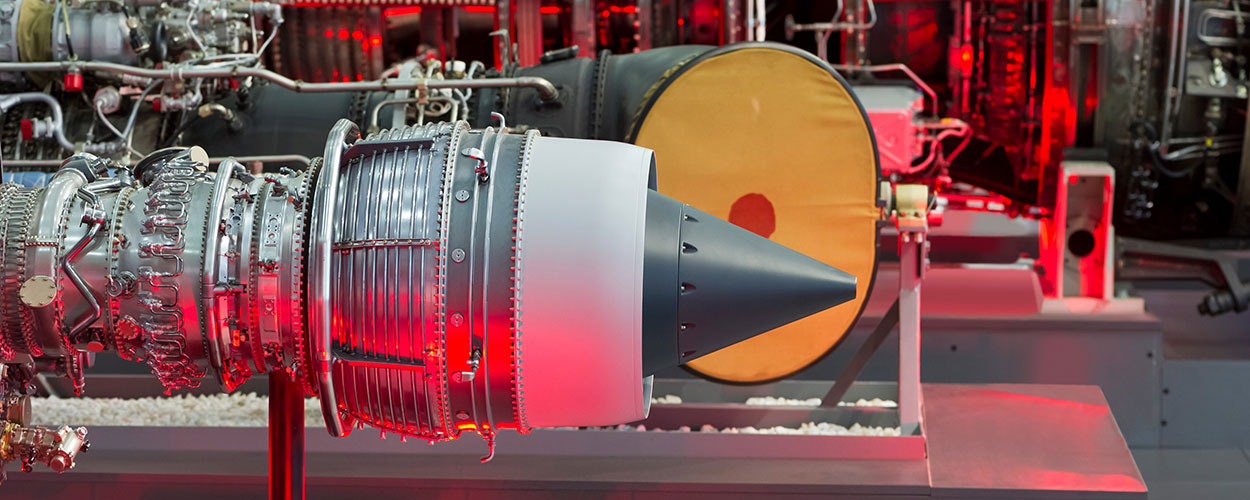
Aerospace MRO shops, Tier-1 and Tier-2 suppliers, and component manufacturers depend on a continuous supply of high-purity nitrogen for heat treating, brazing, and welding of engine and structural parts, composite autoclave cure, tire inflation for landing gear, engine purging and preservation, and leak testing of fuel systems and pressure vessels.
Gas Generation Solutions designs on-site nitrogen systems for aerospace customers across the United States, Mexico, and Canada. Our systems produce nitrogen at purities from 95% up to 99.9995%, reducing gas costs by up to 90% compared to delivered cylinders, dewars, or bulk supply. In business since 1979, we supply USA-built PSA and membrane generators sized to the flow, purity, and pressure requirements of each aerospace process.
How Nitrogen Is Used
Eight aerospace nitrogen applications
From heat treating and brazing engine components through composite cure, tire inflation, and engine preservation, on-site nitrogen replaces delivered gas across the aerospace value chain.
Heat treating and brazing of engine and structural parts
Bright annealing, hardening, tempering, and continuous brazing of aerospace alloys run under inert nitrogen at 99.9% to 99.9995% to prevent oxidation and decarburization. Nitrogen generator for brazing →
Welding back-purge for stainless and nickel-base alloys
TIG and GTAW back-purging of stainless and nickel-base aerospace welds runs on nitrogen or N2/H2 forming gas to suppress root-side oxidation. Titanium welds use argon back-purge because titanium absorbs nitrogen at weld temperatures.
Powder-bed and MIM sintering for steel and Inconel
Stainless, tool-steel, and nickel-base aerospace powder-bed and MIM parts sinter under high-purity nitrogen atmospheres. Titanium and aluminum powder-bed work runs under argon for the same reason it back-purges with argon. Nitrogen generator for sintering →
Composite autoclave cure
Carbon-fiber primary structure and bonded composite assemblies are cured under inert nitrogen pressure inside autoclaves to control resin chemistry and void content.
Tire inflation for landing gear
Commercial and military aircraft tires are inflated with high-purity nitrogen to reduce internal oxidation, lower fire risk, and stabilize pressure across altitude and temperature swings.
Engine purging and aircraft preservation
Engine fuel systems, hydraulic lines, and stored airframes are blanketed with nitrogen to displace oxygen and moisture, slowing corrosion and varnish formation during layup.
Leak testing of fuel and pressure systems
Fuel tanks, hydraulic lines, oxygen plumbing, and pressure vessels are pressure-tested with nitrogen because it is inert, dry, and safe to use on oxygen systems where ambient air or oxygen would not be. Helium is added as a tracer on the most sensitive mass-spec tests.
Pneumatic tooling and inert pressurization
Final-assembly pneumatic tools, rivet guns, and inert pressurization of sealed avionics and battery enclosures run on nitrogen instead of shop air where moisture or oxygen would degrade the contents.
Every aerospace application has a different purity, flow, and pressure profile. The sections below detail the four purity tiers, the heat-treating and brazing deep dive, pressure requirements, and the system sizing for MRO bays through OEM final-assembly facilities.
Purity Tiers
Four aerospace purity tiers, one generator platform
Aerospace nitrogen uses span a wide purity range. The same PSA platform scales from low-purity tire fill through ultra-high purity bright annealing by adjusting sieve-bed cycle and air-to-nitrogen ratio.
Tier 1
95% to 99.5%
Tire inflation, pneumatic tooling, general inerting of stored airframes, and low-purity pressurization where dry inert gas is the requirement rather than tight oxygen control.
Tier 2
99.5% to 99.9%
Engine fuel system purging, hydraulic line displacement, fuel tank inerting, leak testing of pressure vessels, and avionics enclosure pressurization.
Tier 3
99.9% to 99.99%
Brazing of aerospace assemblies, general heat treating, hardening and tempering of steel components, and welding shielding for stainless and Inconel.
Tier 4
99.99% to 99.9995%
Bright annealing of stainless and high-nickel alloys, powder-bed and MIM sintering of additive aerospace parts, titanium welding back-purge, and critical alloy heat treating.
How purity gets selected: aerospace process specifications, OEM atmosphere control documents, and the surface finish required by the next operation drive the purity setpoint. A higher purity setting consumes more compressed air per cubic foot of nitrogen. Sizing the generator to the highest-purity demand on the line and dropping setpoint for lower-purity uses is more efficient than oversizing every system to the ceiling.
Lead Applications
Heat treating, brazing, and welding for aerospace alloys
Aerospace alloy work runs at the highest purities on the page. Each process below has a different residual-oxygen tolerance and a different reason on-site nitrogen wins over delivered supply.
Panel 01
Brazing furnace atmospheres
Continuous and batch brazing furnaces for aerospace assemblies (engine vanes, heat exchangers, structural honeycomb) demand a clean inert atmosphere at 99.99% or higher purity. On-site nitrogen feeds the furnace at the flow it actually consumes, eliminating the cylinder swaps and delivery interruptions that pause production. Hydrogen, when required for active flux-free brazing of stainless or nickel-base alloys, is blended on-site from a smaller cylinder bank into the bulk nitrogen stream.
Panel 02
Back-purge and shielding for stainless and nickel-base aerospace welds
Stainless, Inconel, and other nickel-base aerospace welds use argon at the torch and nitrogen (or an N2/H2 forming-gas mix) as the root-side back-purge. A clean back-purge suppresses root oxidation on the bead underside, which is otherwise rejected at inspection. Titanium is the exception: titanium absorbs nitrogen at weld temperatures to form brittle titanium nitride, so titanium back-purge uses argon, not nitrogen. On-site nitrogen at 200 PSIG inlet supports rigid back-purge fixturing across multiple stainless and nickel-base welding stations.
Panel 03
Bright annealing of aerospace alloys
Bright annealing of stainless steel and high-nickel aerospace alloys requires 99.99% to 99.9995% nitrogen blended with controlled hydrogen. The combination produces a clean, scale-free surface that meets aerospace finish requirements without secondary pickling or grinding. On-site generation makes the bulk gas economical at the flow rates a continuous bright-annealing line consumes.
Panel 04
Powder-bed and MIM sintering for steel and nickel-base aerospace parts
Stainless, tool-steel, and Inconel powder-bed fusion and metal-injection-molded aerospace parts sinter under nitrogen at 99.99% to 99.9995% purity. Residual oxygen at this stage prints into the final part and degrades fatigue performance. The full debind-through-cool-down cycle runs many hours, so delivered gas becomes a major operating cost. Titanium and aluminum powder-bed work is the exception: reactive alloys sinter under argon, not nitrogen.
Panel 05
Inert quench and atmosphere belt furnaces
Belt and box furnaces processing aerospace fasteners, gears, and structural components rely on a continuous nitrogen blanket through carburizing, hardening, and tempering steps. High-pressure inert quench (in vacuum furnaces) uses nitrogen at 6 to 20 bar to cool parts in seconds, an application detailed on the vacuum heat treating page.
Pressure Profile
Aerospace pressure: from 80 PSIG shop air to 5,000+ PSIG cylinder fill
Many aerospace processes run at standard plant air pressure. Several require booster packages well above that. Sizing has to match the highest-pressure use on the line.
Standard
80 to 150 PSIG
Heat-treating furnace blanket, brazing oven feed, composite autoclave backfill at typical cure pressure, tire inflation, general pneumatic tooling. Standard PSA generator output covers this range.
Elevated
200 to 500 PSIG
Welding back-purge fixturing, leak testing of pressure vessels, MRO fuel-system pressurization, vacuum-furnace inert quench at 6 to 20 bar, and aerospace OEM facility pressure standards. Requires a booster package downstream of the PSA generator.
High
1,000 to 5,000+ PSIG
On-site refill of high-pressure cylinders and accumulators, specialty test equipment, and severe-quench applications. Multi-stage booster compressors handle these duties.
Many aerospace OEM and Tier-1 facilities specify nitrogen at 200 PSIG inlet to the use point. That pressure exceeds standard PSA generator output (typically 100 to 150 PSIG) and is met by adding a downstream booster compressor sized to the demand. The booster pulls from the generator buffer tank, lifts the pressure, and feeds an HP receiver that buffers peak draws (a welding fixture cycling on and off, a leak-test rig pressurizing a vessel).
For job shops running fiber laser cutting alongside aerospace heat treating, the same booster topology serves both. The laser cutting page covers booster sizing, HP receiver buffering, and feed-air compressor selection in detail.
System Sizing
Sizing by aerospace facility type
Aerospace nitrogen demand spans three orders of magnitude. The right system size is driven by aggregate use-point flow at the peak hour of the production day.
Small MRO bay
100 to 500 SCFH
Single repair line: engine fuel-system purging, tire inflation cart, leak-test rig, occasional brazing. Compact PSA on a skid.
Tier-2 component shop
500 to 2,000 SCFH
Component brazing line, weld back-purge fixturing, heat-treating box furnaces, leak-test station. Mid-frame PSA with buffer tank.
Tier-1 assembly
2,000 to 10,000 SCFH
Multiple continuous brazing or annealing lines, autoclave cure cells, multi-station weld fixtures. Large PSA, often with high-pressure booster.
OEM final assembly
10,000 to 50,000+ SCFH
Plant-wide nitrogen supply: composite autoclaves, multi-furnace heat treating, full weld and braze production, leak-test cells, tire fill. Containerized or paralleled PSA banks.
Engine test / R&D
Variable
Test cells and development labs run intermittent peak demand with long idle periods. Sized to peak demand plus an HP receiver to buffer test-cycle spikes.
Confirm peak demand before sizing
A free GGS flowmeter rental measures actual nitrogen flow at your facility for 30 days, capturing both average and peak demand. Sizing from real data instead of nameplate estimates avoids over-buying capacity or under-sizing a system into supply problems.
Reserve a flowmeter rental kitOperating Economics
Cost, compliance, and maintenance for aerospace nitrogen
Cost & ROI
Up to 90% gas-cost reduction, payback in 12 to 14 months
Aerospace MRO and supplier facilities running continuous heat treating, brazing, or composite cure typically consume nitrogen at $0.50 to $6.00 per CCF when buying delivered liquid or cylinder gas. On-site generation drops that figure to $0.05 to $0.15 per CCF, paying back the system in 12 to 14 months at typical duty cycles.
Cost savings begin immediately when the system starts and delivered gas stops.
Quality & Compliance
Built-in oxygen analyzer with digital display
Every GGS nitrogen generator ships with an integrated oxygen analyzer reading buffer-tank purity at the digital display. The analyzer signal can be logged into facility quality systems for traceability across heat-treating, brazing, and welding cycles where atmosphere control is a process-control parameter.
Purity is dialable: a single generator covers everything from low-purity tire fill through bright-anneal grade by adjusting setpoint.
Maintenance
Sealed sieve beds, filter changes, 20+ year service life
Routine maintenance is filter changes on a roughly annual schedule, performed by the customer's plant maintenance team. GGS supplies parts and technical guidance. Sealed sieve beds do not require carbon-molecular-sieve top-off, which competing flanged designs typically require every eight to ten years.
No mandatory service contract. System life is 20 years or more on routine filter changes alone.
Specs & Pricing
Aerospace nitrogen system at a glance
Purity range
Gas-cost reduction
Typical payback
Service life
Nitrogen generator price by tier
System cost ranges from approximately $15,000 for compact MRO bay units to $500,000+ for OEM final-assembly plant supply. Pricing varies by flow, purity, and booster requirements.
→ Request a quoteRequest an aerospace system quote
Send your flow, purity, and pressure requirements. We respond with a sized system, drawings, and a complete project estimate within 24 to 72 hours for standard configurations.
→ Free flowmeter rentalMeasure peak demand before sizing
A free 30-day flowmeter rental with cellular data logger captures actual nitrogen consumption at your facility. Sizing from measured data instead of nameplate estimates avoids over- or under-buying.
Frequently asked questions
What nitrogen purity does aerospace manufacturing require?
Purity is process-driven. Tire inflation and pneumatic tooling run at 95% to 99.5%. Engine fuel-system purging and leak testing run at 99.5% to 99.9%. Brazing, general heat treating, and back-purge of stainless and nickel-base welds run at 99.9% to 99.99%. Bright annealing of aerospace alloys, stainless and Inconel powder-bed and MIM sintering, and the cleanest brazing atmospheres run at 99.99% to 99.9995%. Titanium and aluminum work uses argon, not nitrogen, because those alloys absorb nitrogen at process temperatures. A single on-site PSA generator covers the entire nitrogen range by adjusting cycle setpoint.
Why use on-site nitrogen for aerospace MRO and Tier-1 supplier facilities?
Aerospace cycles are long and gas-hungry: a continuous brazing furnace or composite autoclave consumes nitrogen for hours per part. Delivered gas at that duration is expensive and exposes the operation to supply interruptions. On-site generation drops nitrogen cost by up to 90% and removes cylinder swap, dewar return, and bulk delivery from the daily workflow. Most aerospace facilities recover the system cost in 12 to 14 months.
What pressure is required for aerospace nitrogen applications?
Standard processes (heat-treating blanket, brazing oven feed, composite autoclave backfill, tire inflation, pneumatic tooling) run at 80 to 150 PSIG, which standard PSA output covers. Welding back-purge fixturing, leak testing, vacuum-furnace inert quench at 6 to 20 bar, and aerospace OEM facility standards often specify 200 to 500 PSIG, which requires a downstream booster compressor. On-site HP cylinder refill and severe-quench specialty equipment run at 1,000 to 5,000+ PSIG using multi-stage booster compressors.
Can on-site nitrogen support both heat treating and composite cure on the same plant supply?
Yes. A single PSA platform supplies multiple aerospace processes simultaneously by sizing to aggregate peak demand and feeding through a common buffer tank. Heat-treating furnaces draw continuous flow at high purity, while autoclaves draw intermittent high-volume backfill at lower purity. The system runs at the highest purity required by any active use point. For autoclave-specific guidance see our composite autoclave page.
How is nitrogen used for tire inflation on aerospace tires?
Commercial and military aircraft tires are inflated with nitrogen at 95% to 99.5% purity. Nitrogen reduces internal tire oxidation, lowers the risk of in-flight fire from brake heat soak, and stabilizes inflation pressure across temperature and altitude swings. MRO shops with multiple tire-inflation carts size for the parallel-station peak flow rather than the per-cart rate.
Can on-site nitrogen support engine purging and aircraft preservation?
Yes. Engine fuel systems, hydraulic lines, and stored airframes are purged and blanketed with 99.5% to 99.9% nitrogen to displace oxygen and moisture during layup. This slows corrosion, varnish formation, and fuel-line degradation. Aircraft return-to-service after long-term storage is faster and cleaner when preservation was done under nitrogen instead of plant air.
How do I size a nitrogen generator for an aerospace facility?
We need aggregate peak nitrogen flow (SCFH), highest purity required by any use point, highest pressure required, and duty cycle. For aerospace facilities with multiple use points (furnace, autoclave, weld fixtures, leak-test rigs), peak demand is the simultaneous draw at the busiest hour, not the sum of nameplate ratings. A free 30-day GGS flowmeter rental measures actual flow at your facility so the quote is sized to real data rather than nameplate estimates.
What is the typical cost and lead time for an aerospace nitrogen system?
System cost ranges from approximately $15,000 for a single MRO bay through $500,000+ for OEM final-assembly plant supply with booster packages. Lead time is typically 2 to 6 weeks from order to shipment for standard configurations. The customer's mechanical and electrical contractors complete the on-site install and tie-in within one to three days after equipment arrives. Request a quote with your specifications for a complete project estimate.
Budgeting a system
Aerospace manufacturing systems are typically Medium to Large tier with high purity and dedicated turnkey supply. For full nitrogen generator cost ranges, see our tier guide.
Get an aerospace nitrogen system quote
Send your flow, purity, and pressure requirements. We size the system, supply drawings, and provide a complete project estimate for review.