
Salad & Lettuce Packaging
Nitrogen Generators for Packaging Salad and Lettuce Mixes
On-site nitrogen for fresh-cut salad, baby greens, slaw, chopped romaine, kit salads, and foodservice salad bags. 99% to 99.5% purity feeding pillow-bag baggers, clamshell tray sealers, and salad-kit fill lines. Up to 90% lower gas cost than delivered nitrogen, with most fresh-cut plants paying back in 12 to 14 months.
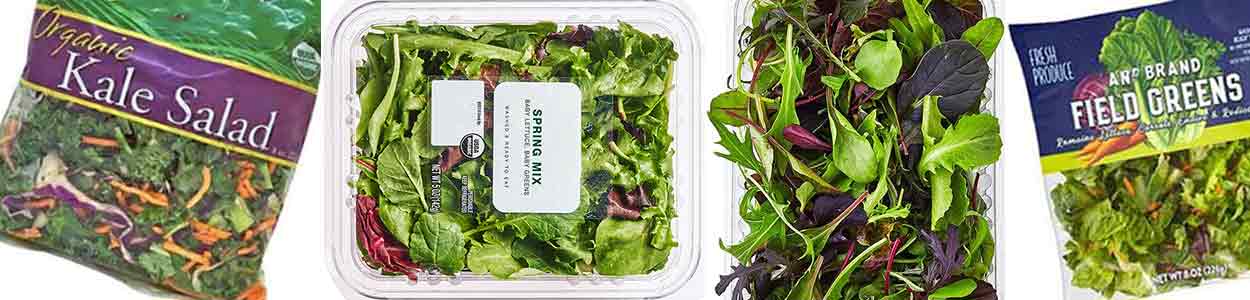
Spring mix, baby greens, romaine, slaw, kit salads across pillow bags, clamshells, and foodservice formats nationwide.
What we do
Fresh-cut salad packaging depends on a continuous supply of nitrogen to slow respiration, displace oxygen at sealing, and balance the modified atmosphere that keeps washed greens crisp and green for weeks instead of days. Gas Generation Solutions designs on-site nitrogen generators for fresh-cut produce processors, salad and slaw packers, kit-salad fillers, baby greens producers, and foodservice salad bag operations. Our systems produce nitrogen at purities from 95% up to 99.9995%, reducing gas costs by up to 90% compared to delivered nitrogen. Gas Generation Solutions has been in business since 1979. Our USA-built systems ship across the United States, Mexico, and Canada. For dressings, sauces, and single-serve packets, see our salad condiment kits, packets, and pouches page. For the broader packaging science, see our MAP nitrogen page or the food grade cornerstone.
Systems in the field
Generator install and customer-packaged output
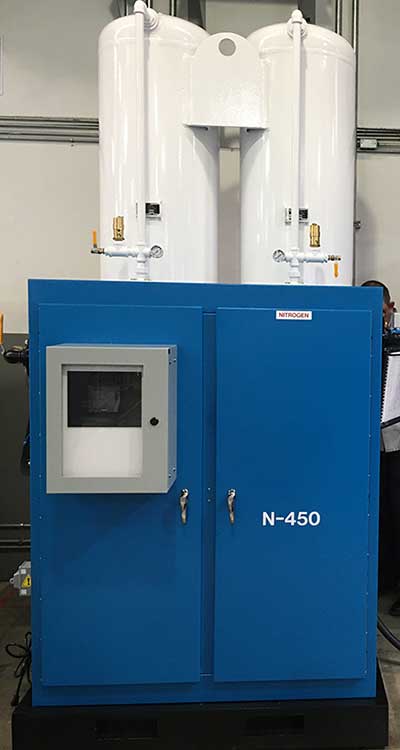
Plant install
PSA nitrogen generator at a fresh-cut salad facility
Single source feeding pillow-bag baggers, clamshell tray sealers, and kit fill lines.
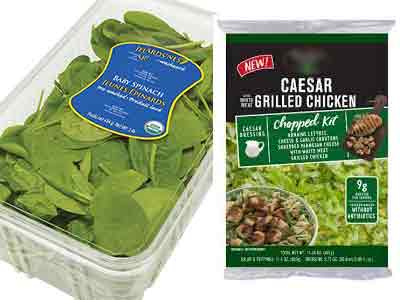
Packaged output
Customer-packaged salad bags flushed with on-site nitrogen
Spring mix and lettuce blends in pillow-bag formats, sealed for 14 to 21 day shelf life under refrigeration.
Applications
How nitrogen is used in salad and lettuce packaging
A correctly sized on-site generator supplies every nitrogen point of use in a fresh-cut operation from a single source: pillow-bag lines, clamshell tray sealers, kit fill, foodservice bag-in-box, processing line inerting, and bulk transport blanketing.
Pillow-bag flushing (VFFS)
Vertical form-fill-seal baggers flush nitrogen into the bag headspace just before the salad mix is dispensed and the bag is sealed. The dominant fresh-cut format.
Clamshell and tray sealing
Tray-seal lines for chopped salad clamshells and rigid-tray formats use nitrogen flushing inside the seal chamber before the lidstock is applied.
Foodservice bag-in-box
Large-format 1.5 to 5 lb foodservice salad bags for restaurants, schools, and institutional kitchens are flushed with nitrogen at fill to extend cold-chain shelf life.
Salad kit and meal kit fill
Multi-component salad kits with toppings, dressing pouches, and protein packets use nitrogen flushing on the greens chamber and outer overwrap to balance shelf life across all components.
Processing line inerting
Spin dryers, conveyors, and weigh hoppers between wash and pack are blanketed with nitrogen to slow oxidative browning of cut surfaces during dwell time.
Bulk tote and transport blanketing
Reusable plastic totes and intermediate bulk containers used to ship cleaned greens between sites are blanketed with nitrogen to hold quality through transport.
One generator, plant-wide supply. A properly sized on-site system feeds every salad packaging line, every tray sealer, and every kit cell from one source. One generator replaces the complete delivered-nitrogen supply chain.
Fresh-cut categories
Salad and lettuce formats that use nitrogen flush
Nitrogen flushing protects every fresh-cut salad SKU. Each format has its own pack geometry, headspace volume, and target equilibrium atmosphere.
Spring mix & blends
Spring mix, 50/50, baby leaf blends, herb-forward mixes.
Baby spinach
Triple-washed baby and tender leaf spinach in pillow bags.
Romaine
Chopped romaine, romaine hearts, romaine ribbons.
Iceberg shreds
Shredded iceberg, chopped lettuce, ribbon cuts for foodservice.
Kale & superfood greens
Chopped kale, baby kale, chard, beet greens, power blends.
Slaw & chopped mixes
Coleslaw, broccoli slaw, kit slaw blends, stir-fry cuts.
Salad kits
Multi-component kit salads with toppings and dressing pouches.
Foodservice bags
1.5 to 5 lb bulk foodservice formats for restaurants and institutions.
Sized to the full product mix. We size the generator to a fresh-cut plant’s entire SKU lineup rather than a single line. New cuts and new formats slot into existing capacity rather than triggering a new gas contract.
Purity & respiration
Two purity tiers for salad. A balanced atmosphere that the bag continues to breathe.
Nitrogen purity
99% for fresh-cut salad, 99.5% for premium and extended-shelf-life programs
Salad and lettuce packaging runs at the lower end of the food-grade nitrogen range, measured as percent N₂ with the balance as residual oxygen in parts per million.
10,000 ppm O₂
Typical for fresh-cut salad and lettuce mix pillow bags, slaw mixes, and standard foodservice cuts.
5,000 ppm O₂
Premium and extended shelf-life programs, baby greens with longer cold-chain targets, smaller-headspace clamshells.
Why salad respires
Living tissue, balanced atmosphere, breathable bag
Fresh-cut salad keeps respiring after harvest. The leaves consume oxygen and release carbon dioxide inside the bag for the entire shelf life. Modified atmosphere packaging for produce uses a high-oxygen-transmission-rate film so the rate of oxygen entering the bag matches the rate the greens consume it. This produces a steady-state equilibrium that holds quality for weeks.
Target O₂ in pack at sale
Equilibrium oxygen inside a fresh-cut bag at retail. Low enough to slow respiration, high enough to keep aerobic respiration going.
Target CO₂ in pack at sale
Equilibrium carbon dioxide inhibits microbial growth and further slows respiration without crossing the species-specific damage threshold for lettuce and tender leaf.
Typical shelf life
Refrigerated washed-and-flushed fresh-cut salad commonly holds 14 to 21 days from pack date, vs 5 to 7 days for air-packed greens. The 2 to 3x extension is the headline value of a well-tuned MAP package.
Equipment compatibility
Built for every major salad packaging OEM
Our nitrogen generators supply fresh-cut packaging equipment from every major OEM, including pillow-bag baggers, tray sealers, kit-fill lines, and foodservice bag-in-box machines. Each machine has its own inlet pressure, flow, and purity spec; we review the spec sheet, match the generator output, and confirm compatibility before quoting.
Sizing & ROI
Sized to measured demand, paid back in 12 to 14 months
Fresh-cut plant tiers
Nitrogen consumption by operation size
Specialty fresh-cut or single-line
One pillow-bag bagger or a small clamshell tray sealer. Local or regional brand SKUs.
Regional fresh-cut processor
Two to four packaging lines spanning bag, clamshell, and salad-kit formats.
Large multi-line processor
Multiple bag and tray lines plus kit fill, with foodservice bulk pack and processing-line inerting.
National-brand multi-plant operations
Mega-processor scale with simultaneous bag, clamshell, kit, and foodservice lines under one roof. Tote and IBC blanketing adds 50 to 200 SCFH per station.
Our free flow meter rental with cellular data logger measures actual plant consumption over days or weeks of normal production. The data logger transmits readings without plant WiFi or network access. Measured data drives sizing instead of nameplate estimates that often overstate demand.
Cost & payback
Up to 90% lower gas cost vs delivered nitrogen
12–14 mo
Typical payback
20+ yr
Service life
$20,000 to $300,000+ system price range for fresh-cut salad operations.
Delivered nitrogen for a fresh-cut plant carries compounding costs: gas charges, cylinder or dewar rental, hazmat fees, delivery surcharges, and 2 to 8% per day boil-off from idle liquid tanks. On-site generation eliminates all of them. Recurring cost is electricity for compressed air plus routine filter changes. Over a 20-year service life, cumulative savings on a regional fresh-cut processor commonly reach several hundred thousand dollars; national-brand multi-plant operations see well over a million in lifetime savings.
Food safety & freshness
14 to 21 days of fresh-cut shelf life from a consistent gas supply
Nitrogen used in fresh-cut salad packaging is food-grade inert gas, listed as Generally Recognized As Safe under FDA 21 CFR 184.1540. It works alongside the breathable bag film to maintain the 1 to 3% oxygen, 5 to 10% carbon dioxide equilibrium that fresh-cut greens need to hold quality.
- Aerobic respiration:slowed without crossing into anaerobic off-flavor territory
- Microbial growth:inhibited by the elevated CO₂ equilibrium across the cold chain
- Cut-surface browning:held back through wash, dry, weigh, and pack stages
- 2 to 3x shelf life:fresh-cut salad bags hold 14 to 21 days vs 5 to 7 days for air-packed
Maintenance
Three filter changes a year, no service contract required
Fresh-cut plant nitrogen generators require minimal routine maintenance. Plant maintenance teams perform filter changes themselves. Annual filter cost is typically a few hundred dollars depending on system size.
- Every 3 months:water and dirt filter change
- Every 6 months:oil filter change, valve and safety device inspection
- Every 12 months:charcoal final filter change
- Sealed sieve beds:no top-off required under normal operation
Related pages
MAP science, food grade context, and sibling F&B pages
The salad page is one part of a broader F&B cluster. Go up to MAP packaging science and the food grade cornerstone, or across to other F&B segments and the salad condiment sister page.
MAP sub-hub
Nitrogen Generator for Food Packaging and MAP
F&B cornerstone
Food Grade Nitrogen Gas Generator
Salad Condiments
Sister pageDressings, kits, packets, single-serve pouches.
Cheese
60/40 · 70/30Shredded, sliced, block, grated, bulk.
Snack Food
100% N₂Chips, jerky, nuts, popcorn, trail mix.
Coffee
100% N₂Whole bean, ground, pods, RTD, cold brew.
Wineries
SpargingTank blanketing, sparging, bottle inerting.
Pet Food
100% N₂Dry food, treats, birdseed.
Shelf Life Data
ReferenceMeasured shelf life gains by food category.
Frequently asked
Questions about salad and lettuce packaging nitrogen generators
What purity of nitrogen is required for packaging salad and lettuce mixes?
Fresh-cut salad and lettuce packaging runs at 99% to 99.5% nitrogen purity (5,000 to 10,000 ppm oxygen). Most fresh-cut bag, slaw, and chopped greens lines run at 99%. Premium and extended-shelf-life programs and smaller-headspace clamshell formats run at 99.5%. Salad packaging never needs purity higher than 99.5% because pushing residual oxygen in-pack below roughly 1% can drive fresh-cut greens into anaerobic respiration, which produces off-flavors and accelerates decay.
How long does fresh-cut salad last with nitrogen flush vs air-packed?
Fresh-cut salad packaged with nitrogen flush and a properly specified breathable bag film commonly holds 14 to 21 days under refrigeration, compared to 5 to 7 days for air-packed greens. The 2 to 3x extension comes from balanced equilibrium of 1 to 3% oxygen and 5 to 10% carbon dioxide inside the bag, which slows respiration and microbial growth across the cold chain.
Do salad and lettuce packs use a nitrogen-CO2 blend or pure nitrogen?
Most fresh-cut salad and lettuce operations flush with nitrogen at fill and let respiration plus a breathable bag film build the modified atmosphere over the first hours and days in the bag. The greens themselves consume oxygen and release carbon dioxide, settling into a 1 to 3% oxygen, 5 to 10% carbon dioxide equilibrium without requiring an upfront blended flush. Some clamshell and rigid-tray formats with low-permeability lidstock do use a pre-blended nitrogen plus carbon dioxide flush. Both approaches are supported by an on-site nitrogen generator.
Can residual oxygen in a salad pack be too low?
Yes. Fresh-cut salad and lettuce mixes are living tissue that needs a small amount of oxygen to keep aerobic respiration going. Pushing residual oxygen in the pack below roughly 1% drives the greens into anaerobic respiration, which produces ethanol, acetaldehyde, and other off-flavor compounds along with accelerated decay. The target equilibrium oxygen for fresh-cut salad is 1 to 3%, not zero.
How much does a nitrogen generator for a fresh-cut salad plant cost?
Systems for fresh-cut salad operations typically range from approximately $20,000 for a single-line specialty processor to over $300,000 for national-brand multi-line plants. Price depends on total flow rate, required purity, delivery pressure, and any redundancy requirements. Regardless of system size, the average payback remains 12 to 14 months because fresh-cut volumes drive consistently high gas consumption.
How much nitrogen does a salad packaging line use?
Consumption varies by line speed, format mix, and package size. Single-line specialty fresh-cut operations typically use 200 to 800 SCFH. Regional fresh-cut processors with two to four lines use 800 to 3,000 SCFH. Large multi-line plants use 3,000 to 10,000 SCFH. National-brand multi-plant operations use 10,000 to 30,000 SCFH or more. Our free flow meter rental with cellular data logger measures actual consumption so the generator is sized to real demand.
Does a single generator supply pillow bags, clamshells, and salad kits at the same time?
Yes. A single generator sized to total plant demand supplies every fresh-cut packaging format from one source: VFFS pillow bags, clamshell tray sealers, salad-kit fill cells, foodservice bag-in-box lines, processing-line inerting, and tote blanketing. This is more cost-effective than separate supplies at each line and simplifies expansion when new SKUs or new lines are added.
How long does a nitrogen generator last in a salad processing facility?
Our systems are designed for 20 years or more of continuous service. Sealed sieve beds do not require replacement or top-off under normal operating conditions. Competing systems using flanged sieve beds may require sieve replacement every 8 to 10 years, which is a significant hidden cost over the life of the equipment.